+971 50 217 6793 Abu Dhabi, UAE info@lifeguarddatarecovery.com
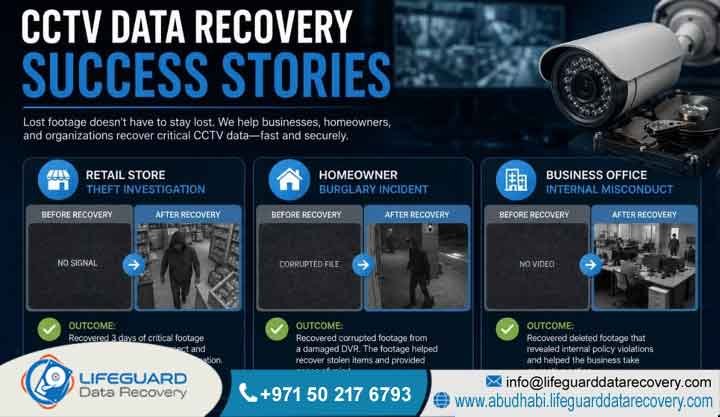
CCTV Data Recovery Success Stories
CCTV data recovery is a specialized digital forensics and data retrieval process. This technical procedure extracts, repairs, and restores lost, deleted, overwritten, or physically damaged surveillance footage. These files are typically retrieved from digital video recorders (DVRs), network video recorders (NVRs), hard drives, and solid-state drives (SSDs).
Lifeguard Data Recovery provides enterprise-grade CCTV footage recovery and surveillance video recovery across Abu Dhabi, Dubai, and the wider UAE. By bypassing corrupt file systems, our engineers work directly with raw data blocks and proprietary video codecs. Consequently, we successfully recover critical security footage required for legal evidence, corporate investigations, and security audits.
Who is Lifeguard Data Recovery?
Lifeguard Data Recovery operates as a premier, government-recognized digital forensics and data retrieval laboratory. Our headquarters are located in Abu Dhabi, UAE. We use advanced laboratory technology to assist our clients effectively.
Meanwhile, our team serves as the primary technical partner for corporate entities, financial institutions, legal firms, and government departments. We securely extract data from failed or compromised storage devices. Furthermore, our organization maintains a highly secure infrastructure to handle sensitive data assets. We always work in strict compliance with UAE data protection regulations and federal cybersecurity frameworks.
Advanced Engineering Capabilities
Our engineers possess deep technical capabilities in hardware repair, firmware modification, and proprietary file system reconstruction. Therefore, we quickly resolve complex data loss incidents where traditional IT systems and retail data software fail.
Additionally, our laboratory specializes in processing storage media that has suffered catastrophic mechanical breakdown. We routinely rescue data from severe fire or water damage, logical corruption, malicious sabotage, or targeted ransomware deployments.
Why Businesses Choose Lifeguard Data Recovery
Enterprise clients and government organizations across the UAE select Lifeguard Data Recovery because of our documented success rates. We consistently deliver audited security standards and rapid response capabilities.
Unlike standard IT service providers, our laboratory is explicitly equipped to manage proprietary, non-standard file systems. These complex systems are commonly used by industrial surveillance platforms and high-density storage servers.
Preserving Data Integrity
We understand that surveillance video often serves as vital legal evidence or operational compliance data. For this reason, the preservation of data integrity and chain of custody remains paramount.
Our facilities employ certified cleanroom environments to protect delicate components. Consequently, we guarantee that hard drive platters and flash memory parts stay safe from microscopic airborne contaminants during physical disassembly.
Risk-Free Professional Services
Moreover, our clear policy removes all financial risk for organizations managing critical operational emergencies. We offer a free evaluation accompanied by a strict no data, no charge commitment.
Our certified engineers possess extensive experience navigating complex storage layouts. For example, we regularly rebuild multi-drive RAID arrays and large-scale network storage configurations. As a result, we provide a reliable pathway to data restoration.
Data Recovery Services We Offer
Lifeguard Data Recovery delivers a comprehensive suite of data retrieval options. These services efficiently address every tier of enterprise data loss.
Hard Drive Recovery
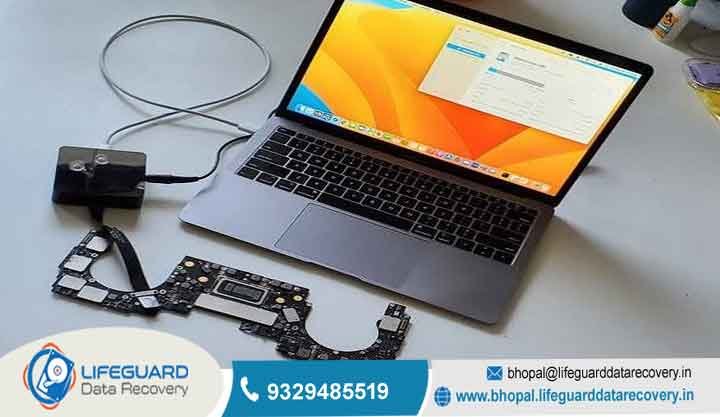
We specialize in mechanical and electronic restoration for all brands of internal and external hard disk drives. For instance, our lab resolves issues involving stuck spindle motors, degraded read-write head assemblies, corrupt firmware chips, and damaged printed circuit boards.
SSD Recovery
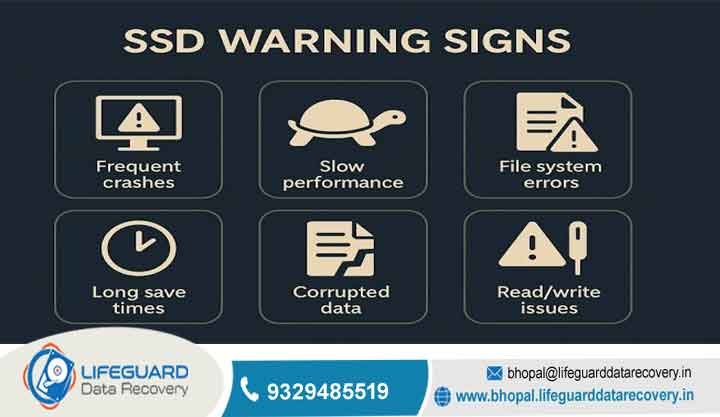
Our engineers possess deep expertise in recovering data from flash memory media. Specifically, we resolve failures in solid-state drive controllers, clear bad NAND flash blocks, and rebuild translation layers through advanced chip-off methodologies.
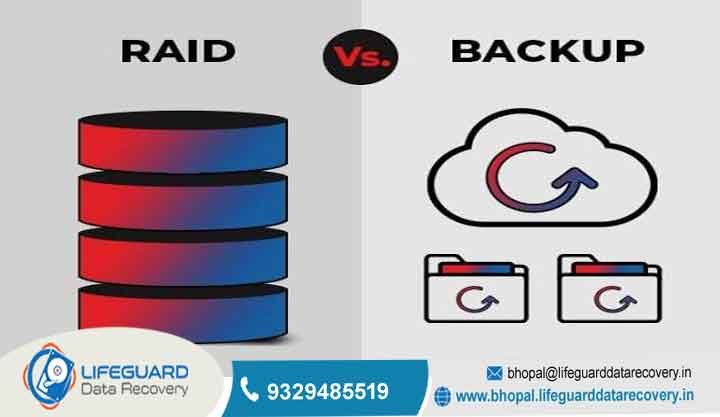
RAID Recovery
We provide advanced rebuilding services for all RAID configurations, including RAID 0, RAID 1, RAID 5, and RAID 6 nested arrays. Therefore, we ensure data restoration even after multiple drive failures or lost configuration metadata.
Server Recovery
Our technical team hot-swaps and reconstructs active server environments daily. During this process, we expertly manage physical drive degradation or logical volume corruption across corporate web, application, and file servers.
NAS Recovery
We extract lost shared folders and volumes from network-attached storage units. By doing so, our team easily bypasses operational system failures and volume management layer corruptions.
Digital Forensics
We execute legally defensible data acquisitions and analysis. Meanwhile, we preserve critical metadata, timestamps, and hash values to support litigation, regulatory compliance, and internal corporate investigations.
CCTV Recovery
Our team extracts and reconstructs missing, corrupted, deleted, or physically damaged security camera footage. We retrieve this data directly from commercial and industrial storage architectures.
Ransomware Recovery
Our ransomware response team decrypts, parses, and reconstructs database structures and file archives. Consequently, we mitigate operational downtime after malicious cyberattacks without yielding to extortion demands.
Which Devices Do We Recover?
The technical team at Lifeguard Data Recovery routinely processes a vast ecosystem of surveillance recording hardware. We fully support industrial, commercial, and residential architectures.
Digital Video Recorders (DVR)
We recover direct analogue-to-digital video files from standalone DVR units. These units often utilize highly customized, proprietary Linux file systems. Consequently, they hide data structures when connected to standard operating systems.
Surveillance-Grade Hard Disk Drives
We handle enterprise surveillance drives such as Western Digital Purple and Seagate SkyHawk series. These drives operate under unique streaming firmware parameters optimized for continuous write cycles. Therefore, they require precise configuration during physical calibration inside our cleanroom.
Solid-State Surveillance Media and Enterprise Infrastructure
We extract raw video frames from modern high-speed solid-state arrays used in edge-computing cameras. Additionally, our engineers manage large-scale surveillance networks backed by SAN or high-capacity NAS enclosures. We handle setups where video feeds from hundreds of cameras aggregate across high-density storage arrays.
Common Data Loss Situations in Surveillance Systems
CCTV storage media operates under continuous stress due to uninterrupted, 24-hour write cycles. This heavy workload makes the equipment highly susceptible to multiple vectors of data loss.
Physical Mechanism Failure
Due to nonstop mechanical operation, surveillance hard drives experience accelerated wear on read-write heads and spindle bearings. Consequently, this stress leads to sudden drive clicks, surface scratches on platters, and total drive seizure.
Accidental or Malicious Deletion
Critical footage is frequently removed through human error during system configuration. Alternatively, unauthorized personnel sometimes intentionally erase files to obscure evidence of security breaches or operational incidents.
Overwritten Video Frames
Many DVR and NVR systems automatically record over older footage once storage capacity fills up. If an operator notices an incident too late, the vital video blocks may be partially or completely overwritten by new camera streams.
File System Corruption and Physical Disasters
Sudden power interruptions, voltage fluctuations, or improper system shutdowns can corrupt the index tables of the recorder file system. As a result, the video files instantly become inaccessible to the operating software. Furthermore, surveillance equipment is often caught in structural fires, localized flooding, or extreme environmental heat. These events cause physical deformation, melted components, or waterlogged drive casings.
How Our Recovery Process Works
Lifeguard Data Recovery implements a highly disciplined, multi-stage recovery workflow. This process maximizes data yield while strictly preserving the integrity of the original evidence.
Phase 1: Safe Intake and Evaluation
Upon arrival at our Abu Dhabi laboratory, we log the media into our asset tracking system. Engineers then conduct an initial diagnostic evaluation to identify the exact cause of failure without causing further stress to the media.
Phase 2: Physical Stabilization and Cleanroom Repair
If we detect mechanical or electrical damage, we transfer the drive to a certified cleanroom environment. Technicians then replace defective components, such as read-write heads or control boards, with matching donor parts from our extensive inventory.
Phase 3: Bit-Level Bitstream Cloning
Once stabilized, we connect the drive to advanced forensic hardware imagers. This equipment creates an identical, sector-by-sector binary clone of the data. Consequently, all subsequent analytical and extraction processes are performed exclusively on this copy to protect the source media.
Phase 4: Raw Data Extraction and Codec Reconstruction
Engineers analyze the binary image using specialized forensic tools to locate signature frame headers and video patterns. This step effectively bypasses corrupt operating systems. Finally, we reconstruct raw data blocks into viewable, sequential video clips.
Phase 5: Quality Verification and Secure Delivery
The recovered video files undergo a strict verification process to ensure player compatibility and clarity. Afterward, we encrypt the finalized data and load it onto a secure external delivery drive for a safe return.
Expected Recovery Timeframes
The operational duration required to execute a complete data recovery project depends primarily on two factors. These are the physical state of the storage media and the volume of data we need to process.
Standard Timelines
Our initial evaluation takes between 24 to 48 hours. During this window, we determine the feasibility of recovery, the technical approach, and the exact cost structure. Typical logical corruptions or minor drive repairs are completed within 3 to 5 business days from client authorization.
Emergency Response Timelines
For critical corporate crises where business continuity is severely threatened, we deploy our emergency response protocol. In these situations, engineers work continuously around the clock. Consequently, they finish the stabilization and extraction within 24 to 48 hours.
Physical Reconstruction Variables
Projects involving extreme physical damage, fire exposure, or rare drive models may require extra time. For example, we may need additional hours to source precise matching donor components or perform delicate micro-soldering and platter cleaning procedures.
Critical Data Recovery Success Factors
Achieving a high data recovery success rate depends on several critical technical variables and immediate post-incident behaviors.
Time Elapsed Since Data Loss
The single most influential factor in deletion scenarios is the speed at which you power down the recording device. Leaving a CCTV system running causes new video streams to write over the unallocated clusters. Unfortunately, this rapidly reduces the possibility of a complete recovery.
Physical Manipulation Attempts
Unprofessional attempts to open a hard drive outside of a certified cleanroom introduce destructive dust particles. These contaminants cause permanent head crashes and irreversible data destruction. Therefore, you should always avoid DIY physical repairs.
Degradation and Firmware Stability
Severe scoring on a hard drive platter or extensive bad block propagation can physically obliterate data zones. Additionally, the integrity of the internal microcode on the drive controller chip determines whether forensic imaging equipment can achieve steady communication with the storage media during extraction.
Specialized Industries We Serve
Lifeguard Data Recovery expands B2B topical authority by linking our core services to high-value industrial sectors across the Middle East.
-
Banking and Financial Institutions: Securing automated teller machine (ATM) footage and vault surveillance logs.
-
Logistics and Free Zones: Retrieving container tracking videos and warehouse entry-exit records in major port areas.
-
Government and Defense: Restoring sensitive institutional security data under strict confidentiality guidelines.
-
Hospitality and Retail Malls: Recovering loss prevention video assets and public safety monitoring feeds.
-
Legal Professionals and Law Enforcement: Providing court-admissible digital forensic video files with verified cryptographic signatures.
Data Security and Legal Compliance
Lifeguard Data Recovery operates under strict protocols to maintain absolute data privacy. Consequently, we ensure full compliance with the strict data governance mandates of the United Arab Emirates.
Physical and Network Security Controls
We enforce rigorous physical security controls across our laboratory facilities. For example, we restrict access to authorized technical staff via biometric identification checkpoints. Furthermore, we process all recovered corporate and government data on isolated networks with no connection to the public internet, preventing any external data leakage risks.
Legally Defensible Workflows
Our engineering workflows fully respect the documentation standards required for digital forensic evidence. Therefore, we ensure that recovered video files remain completely valid for introduction in UAE judicial proceedings or regulatory audits.
Additionally, we securely sanitize our local storage systems upon successful delivery of the recovered data and formal client sign-off. We permanently erase all residual data using methods that exceed international corporate data destruction standards.
Comprehensive UAE Coverage
We provide rapid response coverage across all seven emirates of the UAE, ensuring prompt logistics and technical deployment for regional corporate enterprises.
-
Abu Dhabi: Our primary operations center provides immediate walk-in diagnostics, local courier pickup, and dedicated account management. We service corporate offices, security firms, and government facilities throughout the capital city and Al Ain.
-
Dubai: We offer fast daily logistics and technical support for businesses across Dubai. This includes the Dubai International Financial Centre (DIFC), Dubai Media City, and Jumeirah.
-
Sharjah: Our courier networks provide daily collection services for industrial complexes and commercial operations located within Sharjah.
-
Northern Emirates: We maintain active collection networks servicing Ajman, Fujairah, Ras Al Khaimah, and Umm Al Quwain. Thus, we ensure remote industrial sites, coastal operations, and logistics centers have direct access to our specialist laboratory.
Frequently Asked Questions (FAQs)
What is CCTV data recovery?
CCTV data recovery is the highly technical process of extracting and rebuilding video files from surveillance storage systems. This specialized service involves addressing hardware failures, reconstructing damaged file structures, and locating raw video frames hidden within unallocated sectors. Professional recovery specialists use specialized hardware tools and custom software scripts to bypass the standard operating system of the recording unit. This ensures that video evidence is safely retrieved without modifying critical timestamps or file metadata.
How does surveillance video recovery work?
The process begins by stabilizing the physical recording media inside a specialized laboratory environment to fix any mechanical or electronic defects. Once the storage drive can read data reliably, engineers create a sector-by-sector binary clone of the media to protect the original evidence. Specialized parsing software then searches this binary clone for distinct video frame signatures and proprietary codec headers. These isolated fragments are then sequentially reassembled into standard, playable video files that can be viewed on conventional media platforms.
Who needs this professional recovery service?
This service is essential for corporate security managers, legal professionals, law enforcement agencies, and business owners. These professionals frequently need to retrieve critical video evidence that has disappeared due to drive failures or intentional deletion. Organizations often require these services to investigate workplace incidents, verify security breaches, provide evidence for legal proceedings, or maintain regulatory compliance. When standard IT teams cannot access the recorder data storage, a specialist data recovery laboratory is required to safely extract the information.
How much does CCTV data recovery cost in UAE?
The total financial investment required for a recovery operation depends on the nature of the drive failure, the capacity of the storage array, and the urgency of the project. Simple logical recovery tasks carry a different pricing structure than complex cleanroom procedures involving mechanical head replacements or fire-damaged media. Lifeguard Data Recovery provides a transparent, fixed quote following a comprehensive initial diagnostic assessment of the device. Our strict adherence to a no data, no charge policy ensures that clients only pay the agreed amount once their required video files are successfully recovered.
How long does the recovery process take?
The standard turnaround time for evaluating and extracting data from a typical surveillance drive ranges between three to five business days. For urgent situations involving ongoing legal matters or critical business disruptions, our emergency protocol can reduce this timeline to twenty-four to forty-eight hours. The exact duration depends on the physical responsiveness of the drive platters and the total storage volume that needs to be forensically imaged. We maintain a large inventory of matching donor components to ensure hardware repairs are initiated without procurement delays.
Can deleted CCTV files be recovered?
Yes, deleted surveillance video files can generally be retrieved provided that the recording system was powered down quickly after the deletion occurred. When a video clip is deleted, the system simply marks that storage space as available for new data while leaving the actual video frames intact. If the system continues to run, new incoming video feeds will systematically overwrite these unallocated sectors, destroying the old data forever. Prompt isolation of the device is the most important factor in ensuring a successful deletion recovery.
Can damaged SSDs be recovered?
Yes, solid-state drives used in modern recording applications can be successfully recovered through specialized flash memory procedures. When an SSD experiences an electronic failure or controller corruption, data access is blocked even though the underlying flash memory chips remain safe. Our engineers use advanced equipment to read data directly from individual NAND flash chips, bypassing a failed controller entirely. We then reverse engineer the proprietary wear-leveling algorithms to reconstruct the original video files.
Can failed RAID arrays be repaired?
Yes, our engineers can reconstruct data from failed RAID configurations utilized in large-scale network video recorders and corporate storage servers. We support all common configurations including RAID 0, RAID 1, RAID 5, and RAID 6 architectures. Our laboratory can recover data even when multiple drives have failed simultaneously, or when the configuration metadata has become corrupted. We safely clone each individual drive within the array and use advanced software emulation to rebuild the logical volume and extract the video directories.
What determines recovery success rates?
The final success rate depends primarily on the physical condition of the storage platters or flash memory chips and the amount of data overwriting that occurred after the incident. Mechanical drives with severe physical scratches on the magnetic surfaces present a much higher technical challenge than drives with simple electronic failures. Additionally, using uncertified software tools can inadvertently write data back to the damaged drive, causing permanent corruption. Choosing an experienced laboratory with certified cleanroom facilities maximizes the probability of a successful outcome.
Is it possible to recover footage from a water-damaged DVR?
Yes, footage can be recovered from water-damaged recording devices if the internal hard drive platters are professionally treated before oxidation and corrosion set in. When a drive is exposed to water, it must never be powered on or dried out using temporary methods, as this accelerates mineral crusting on the platters. Our laboratory technicians carefully disassemble the drive inside a cleanroom, clean the platters using specialized chemical solutions, and dry them using precision instruments. The stabilized platters are then placed into a matching donor chassis to perform the forensic data extraction.
Can video files corrupted by ransomware be restored?
Yes, our specialized ransomware recovery team can often reconstruct video databases and individual files that have been corrupted or encrypted by malware. Instead of paying extortion fees, we analyze the structure of the encrypted files to identify unencrypted headers or residual temporary files. In many cases, surveillance systems create temporary cache files or sequential backups that the malware skips during its encryption cycle. Our engineers extract these fragments to rebuild functional video streams and restore operational data continuity.
How do you verify the quality of recovered video?
Our engineering team utilizes a rigorous quality assurance validation process to confirm that recovered files are stable, complete, and viewable. We use automated verification tools to check the structural integrity of the container formats and test file playability across multiple enterprise codecs. For sensitive investigations, we can provide a secure file listing or a blurred thumbnail preview sheet to verify that the specific time frames required are fully present before final delivery. This ensures complete transparency and confirmation of data utility before any financial transactions are completed.
Technical Entity Deep-Dive
What is the difference between DVR and NVR data structures?
Digital Video Recorders (DVR) and Network Video Recorders (NVR) utilize distinctly different hardware frameworks and data storage structures. A DVR system typically processes raw analogue video feeds directly at the physical unit. Consequently, it converts the data into compressed digital formats that are written to local hard disk drives via proprietary, stripped-down variations of Linux file systems. These file systems often lack standard partition tables and index video frames by channel numbers and absolute timestamps directly in the disk sectors.
Conversely, an NVR system receives pre-compressed digital video streams over an Ethernet network from IP cameras. The storage architecture in an NVR is typically more sophisticated. For example, it often utilizes structured database layers or advanced Linux software RAID arrays to manage high-throughput, multi-channel streams. Because NVRs often handle multiple high-definition video sources simultaneously, their data allocation strategies involve complex block distributions across multiple disks. Therefore, this setup requires deep structural knowledge of partition maps and indexing systems when executing a forensic data extraction.
How does Digital Forensics apply to surveillance video recovery in the UAE?
Digital forensics plays a fundamental role in surveillance video recovery across the United Arab Emirates. Specifically, it guarantees that all extracted data remains legally admissible and free from alteration. In the UAE, corporate compliance, judicial reviews, and police investigations require a strict chain of custody to ensure digital evidence is genuine and uncompromised.
When Lifeguard Data Recovery executes a forensic video retrieval, engineers utilize write-blocking hardware. This tool prevents any modification to the source media during the diagnostic and imaging phases. Additionally, every recovered video clip is documented alongside its corresponding cryptographic hash values, such as MD5 or SHA-256. These values act as a digital fingerprint verifying that the file has not been altered post-recovery. This methodical approach ensures that critical video evidence can be fully trusted by judicial bodies, insurance adjusters, and corporate legal teams during official proceedings in Abu Dhabi, Dubai, and throughout the UAE.
Data Recovery Comparison Matrix
Professional Lab Recovery vs. DIY Recovery
Attempting a do-it-yourself (DIY) recovery on an enterprise surveillance storage device introduces severe operational and technical risks. DIY attempts typically rely on connecting the storage drive directly to standard operating systems via external adapters. Because surveillance recorders use customized, proprietary file structures, these standard systems will fail to recognize the drive partitions.
Consequently, the operating system will prompt the user to format the disk. Agreeing to this prompt writes new file system metadata over the lost video files, causing extensive corruption. Furthermore, if the drive suffers from hidden mechanical issues, powering it up repeatedly in an uncontrolled environment accelerates internal damage. This mistake leads to permanent head failure and complete destruction of the magnetic storage layers. Professional recovery provides a controlled environment utilizing hardware-based write-blockers, deep file system expertise, and non-destructive cloning procedures that eliminate further data loss risks.
Professional Lab Recovery vs. Commercial Recovery Software
Commercial data recovery software programs are built to scan standard, consumer-grade file systems such as NTFS, FAT32, or exFAT. Therefore, these applications are generally incapable of parsing the proprietary, raw video streaming formats used by commercial DVR and NVR systems. When standard software scans a surveillance drive, it typically fails to find familiar file pointers. As a result, it either reports the drive as empty or extracts corrupted, unplayable file fragments.
More importantly, software utilities require installing programs or running intense drive scans that force stressed hardware to run at maximum capacity for extended periods. If a drive has weak read-write heads or degraded media surfaces, the intense scanning process can cause a catastrophic mechanical breakdown mid-scan. Professional recovery laboratories do not run software utilities directly on live drives. Instead, they create a safe bitstream clone using specialized hardware tools that manage read timeouts and current fluctuations safely.
When Businesses Should Choose a Specialist Recovery Lab
A business should instantly engage a specialist data recovery laboratory the moment a surveillance storage system exhibits any signs of physical malfunction. Likewise, they should seek help when the required footage is critical for legal, regulatory, or operational safety. Signs of physical drive failure include clicking, grinding, or ticking noises coming from the recorder enclosure. A system that freezes during boot cycles, or a drive that is no longer detected by the system BIOS also indicates failure.
Furthermore, if the data loss event is tied to an active corporate investigation, an insurance claim, or a legal dispute within the UAE, a specialist lab is required to ensure a verified chain of custody. Attempting intermediate troubleshooting using internal IT personnel can inadvertently overwrite critical unallocated sectors or void hardware warranties without retrieving the required video files. Safely containing the media and delivering it to a dedicated laboratory preserves all remaining recovery pathways.
Case Study: RAID 5 NVR Data Retrieval in Abu Dhabi
The Problem and Urgency
A major logistics provider operating a high-security distribution center in Abu Dhabi experienced a catastrophic storage failure on their primary 16-bay Network Video Recorder array. The system was configured in a RAID 5 architecture using enterprise hard disk drives. Following a localized power surge caused during electrical maintenance, the NVR system abruptly crashed. Upon rebooting, the system controller indicated that two critical hard drives had dropped offline simultaneously, causing the entire logical volume to collapse and rendering the continuous security video feeds completely inaccessible.
The data loss occurred concurrently with an internal investigation regarding an inventory discrepancy inside the main warehouse vault. The internal corporate security team required immediate access to the specific high-definition video clips from channels 4, 8, and 12 covering a specific 72-hour operational window. UAE regulatory compliance rules required the logistics provider to maintain continuous, verifiable surveillance records for all high-value storage zones, making rapid data restoration a priority to avoid significant regulatory penalties and complete the internal investigation.
The Recovery Process
The failed hard drives were safely extracted from the NVR chassis by the client’s IT team and hand-delivered to the secure Lifeguard Data Recovery laboratory in Abu Dhabi for emergency assessment. Our diagnostic teams discovered that Drive 4 had suffered a complete electronic failure on its printed circuit board, while Drive 7 had developed severe firmware read track corruptions on the system sectors. The remaining fourteen drives were functionally stable but showed minor sector degradation due to nonstop operation.
Our engineers moved Drive 4 into the certified cleanroom environment, where the damaged control board was replaced and the internal ROM chip was safely desoldered and transferred to a compatible donor board to restore communication. Drive 7 was connected to our advanced firmware repair systems, where the internal allocation tables were repaired in safe mode. Once both drives were stabilized, sector-by-sector forensic images were generated for all sixteen drives across the array. Our software engineers then analyzed the physical block layout, determined the exact striping size and parity patterns, and virtually reconstructed the RAID 5 parameters on our secure computational servers.
The Final Outcome
The virtual reconstruction gave our team direct access to the raw proprietary Linux partition layer. Using custom data carving scripts optimized for the specific NVR video codec, our engineers successfully bypassed the corrupted operating system structures and located the raw video streams. We isolated and extracted the requested 72-hour video window for channels 4, 8, and 12 with zero frame drops.
The recovered video files were thoroughly verified for clarity and exported into standard high-definition formats. The data was delivered to the client on an encrypted external drive within 36 hours of the initial intake. This rapid turnaround enabled the logistics company to fulfill its regulatory compliance obligations, present clear video evidence to its legal team, and successfully resolve the internal warehouse investigation.
Verified Trust Signals and Guarantees
Lifeguard Data Recovery incorporates industry-leading operational metrics and protection safeguards. Consequently, we ensure every client experiences a reliable, secure data retrieval process.
-
24/7 Emergency Support: We maintain a dedicated emergency response hotline to manage high-priority enterprise data disasters at any hour, ensuring immediate laboratory mobilization.
-
Certified Technical Specialists: Our engineering team undergoes constant training to safely manage modern flash storage, complex network architectures, and advanced data forensic applications.
-
Secure Recovery Laboratory: Our facilities feature restricted biometric entry checkpoints and continuous monitoring to guarantee that all client media remains entirely secure throughout its stay in our lab.
-
No Data, No Charge Commitment: If our technical teams are unable to successfully retrieve the critical files defined during your initial consultation, there is no service fee assessed.
-
Enterprise-Grade Security Frameworks: We handle all customer data on completely isolated local networks, ensuring no risk of external interception, malware infection, or unauthorized data access.
-
Confidential Handling Procedures: Standard non-disclosure agreements are available for all projects, ensuring complete privacy protection for sensitive corporate, financial, and legal records.
-
Rapid Project Turnaround: Our large inventory of in-stock donor parts allows us to perform physical component replacements immediately, avoiding long logistics delays.
-
UAE-Wide Collection Logistics: We coordinate secure, traceable courier pickup and delivery services across all seven emirates, making our laboratory accessible from any location.
Conclusion: Partner with UAE’s Trusted CCTV Recovery Specialists
Lifeguard Data Recovery stands as the most dependable data retrieval provider in the United Arab Emirates. We consistently combine specialized forensic engineering with clear, risk-free business practices. Our laboratory does not rely on consumer-grade scanning software. Instead, we invest heavily in cleanroom infrastructure, hardware disk imaging equipment, and deep research into proprietary surveillance file structures.
This technical expertise ensures we can recover vital video files from situations that other IT support networks classify as unrecoverable. By prioritizing data integrity, strict privacy controls, and a transparent no data, no charge guarantee, we provide UAE businesses with a professional pathway to reclaim critical digital assets after catastrophic storage failures.
If your enterprise is dealing with a critical storage failure or a loss of essential surveillance video, contact our specialized engineering team immediately to schedule a priority evaluation.
-
Call Us Directly: +971 50 127 6793
-
Email Your Project Requirements: info@lifeguarddatarecovery.com
-
Log an Emergency Request Online: www.abudhabi.lifeguarddatarecovery.com