+971 50 217 6793 Abu Dhabi, UAE info@lifeguarddatarecovery.com
Recover Contacts From Android
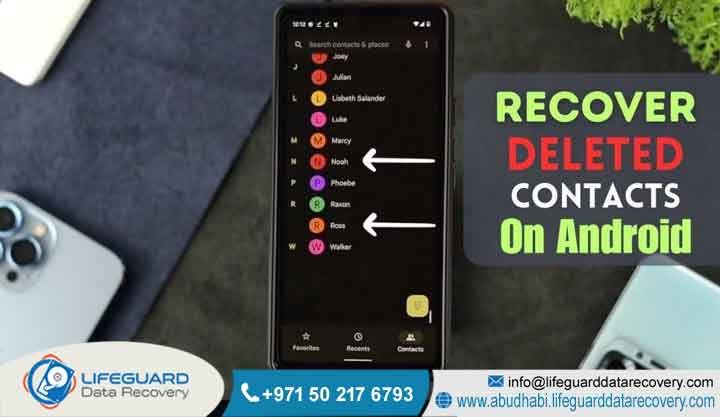
Android contact recovery is a specialized technical process. It retrieves deleted or missing phone numbers, address book records, and contact metadata from an Android device’s internal storage or linked cloud services.
When you lose data via accidental deletion, factory resets, or operating system corruption, the system removes the database pointers. However, the actual contact information remains temporarily stored in the SQLite database format inside the internal memory. It stays there until new data overwrites it.
Professional Android phone contact recovery isolates this unallocated storage space using advanced digital forensics methods. Consequently, these techniques restore lost contacts on Android securely without risking device integrity.
Enterprise Android Contact Recovery: Who is Lifeguard Data Recovery?
Lifeguard Data Recovery operates as an enterprise-grade data retrieval and digital forensics laboratory. We maintain the highest tier of technical compliance in the United Arab Emirates. Headquartered in Abu Dhabi, our organization serves commercial corporations, government entities, legal institutions, and private individuals. We specialize in the high-success retrieval of critical digital assets from failed or inaccessible media.
Standard repair shops usually rely on consumer-grade software applications. In contrast, our specialized laboratory maintains advanced hardware manipulation tools, logical extraction equipment, and proprietary raw-storage carving algorithms. These capabilities allow our engineers to bypass physical and software-level obstacles on modern flash memory storage efficiently.
Why UAE Businesses Choose Lifeguard Data Recovery
Corporate enterprises across the UAE select Lifeguard Data Recovery because we verify our compliance with strict data governance frameworks. Additionally, we successfully manage severe media failures. When an Android device undergoes sudden data loss, it compromises business continuity. This happens because the company loses client communications, vendor lists, and critical executive networks.
Our laboratory mitigates this operational downtime by deploying certified digital forensics specialists. These experts treat every storage device with strict forensic protocols. Therefore, the chain of custody remains entirely uncompromised. This careful process allows the retrieved records to be legally admissible in judicial settings if required. Furthermore, our commitment to data privacy guarantees that your client information never interfaces with external networks during the retrieval cycle.
Comprehensive Mobile & Media Data Recovery Services We Offer
The modern corporate data landscape requires multi-platform infrastructure mastery. Because of this complexity, Lifeguard Data Recovery delivers comprehensive media recovery options engineered for diverse storage environments.
Core Recovery Capabilities
Hard Drive Recovery: We address mechanical and electronic failures on traditional magnetic platters utilized in secondary backup pools.
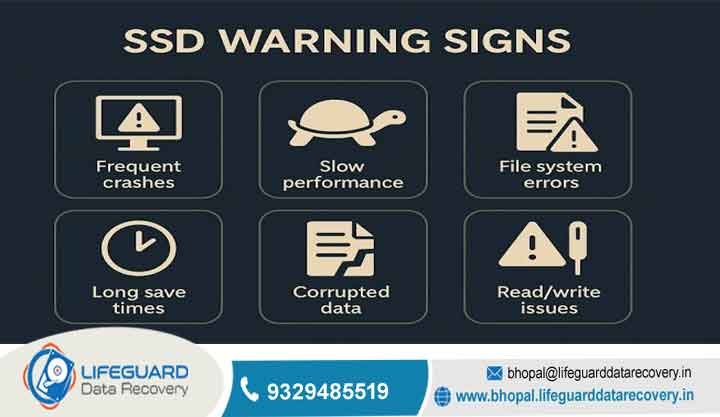
SSD Recovery: Our workflows utilize hardware-level controllers to bypass damaged NAND flash blocks and retrieve fragmented files.
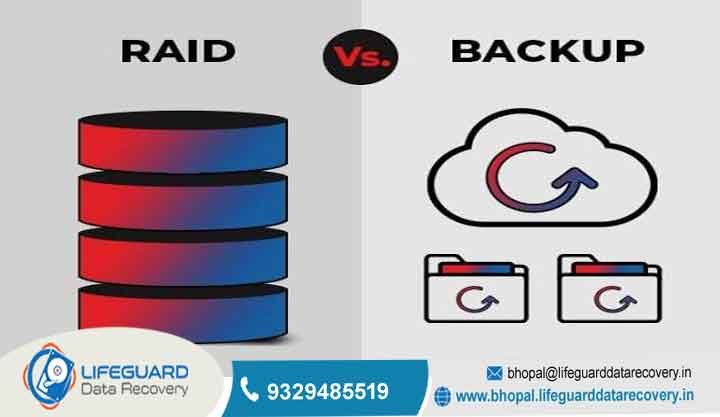
RAID Recovery & Server Recovery: We restore degraded disk arrays, corrupted virtual environments, and critical enterprise databases.
NAS Recovery: Our solutions systematically fix logic errors, file system structural damage, and multi-drive sync failures.
Digital Forensics: Specialists execute forensically sound extractions of mobile phone information, logs, and hidden partitions.
CCTV Recovery: We extract proprietary video streams from damaged security physical disks.
Ransomware Recovery: Technicians decrypt, isolate, and rebuild corporate databases impacted by malicious cyber attacks.
Flash Memory and Internal Storage Devices We Recover
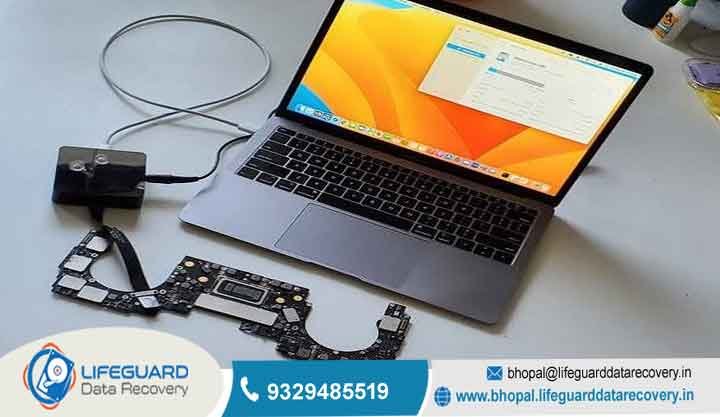
Modern Android hardware relies completely on solid-state architecture. Specifically, manufacturers use embedded Multimedia Card (eMMC) or Universal Flash Storage (UFS) chips soldered directly to the motherboard.
Our engineers recover files from all variations of flash memory storage regardless of manufacturer, interface, or form factor. For example, we support internal storage systems found across all current generation Android devices, high-capacity external solid-state media, micro SD cards, and solid-state drives.
Solid-state memory architecture does not use mechanical components. Consequently, recovering data from these chips requires an intimate understanding of electronic circuit path analysis. Engineers must also understand controller chip command structures.
Common Android Data Loss Situations and Root Causes
Identifying the underlying catalyst for data loss is essential. This knowledge helps us determine the appropriate technical response. In mobile ecosystems, contact database extraction challenges generally stem from three specific risk categories.
Primary Risk Categories
-
Logical Corruption: This category includes accidental individual deletions and software sync conflicts with corporate cloud accounts. Interrupted operating system firmware upgrades and malicious application scripts also alter database files.
-
Physical Media Damage: This occurs when an Android device experiences liquid immersion, severe kinetic impacts, or thermal expansion. Electrical overvoltage from faulty charging equipment also destroys internal components.
-
System-Level Lockouts: This includes forgotten pattern locks, biometrics failures, and factory resets executed remotely via corporate mobile device management systems.
When Should UAE Businesses Contact an Expert Recovery Lab?
A business must transition to a professional data recovery laboratory the precise moment it identifies primary data loss. If a device has sustained physical damage or displays an irregular boot loop, turn it off immediately. Furthermore, if it becomes unresponsively warm, further power cycles can worsen the data loss.
Modern Android operating systems actively perform autonomous maintenance tasks. These automated routines can permanently overwrite unallocated space where deleted contact data resides. Therefore, contacting an expert laboratory immediately ensures the device is isolated from network signals, maximizing the volume of recoverable information.
Step-by-Step: How Our Professional Mobile Recovery Process Works
We deploy a systematic, standardized process to guarantee optimal retrieval rates. Lifeguard Data Recovery executes mobile media restoration through a controlled four-stage pipeline.
Mobile Data Recovery Timeframes & Emergency SLA Options
Time is a critical variable when corporate operations face disruption. Therefore, Lifeguard Data Recovery provides distinct Service Level Agreements (SLAs) to meet varying business requirements.
| Service Level | Turnaround Time | Best For |
| Standard Service | 4 to 6 business days | Routine archival needs and non-urgent recovery |
| Priority Tier | 2 to 3 business days | Time-sensitive commercial requirements |
| Emergency Level | 12 to 24 hours | Critical data loss events impacting active revenue |
Technical Recovery Success Factors for Flash and Storage Media
The probability of a successful contact extraction from solid-state media depends on specific technical variables. A primary factor is the state of the TRIM command function. Additionally, active garbage collection protocols built into modern Android operating systems affect the outcome.
When you mark files for deletion, these automated features work to erase the corresponding flash blocks. They do this to preserve write speeds.
Success is also heavily influenced by encryption. If file-based encryption or full-disk encryption is active on the system partition, engineers must extract cryptographic keys from protected hardware registers. Finally, the physical structural integrity of the storage chip blocks determines whether direct chip-off forensic reading is necessary.
Specialized Data Recovery for Regulated Industries in the UAE
Certain commercial sectors within the United Arab Emirates operate under strict statutory frameworks. These laws mandate rigorous data protection controls during media handling. Legal practices, healthcare providers, banking institutions, and defense contractors cannot entrust devices to unverified entities due to regulatory penalties.
Lifeguard Data Recovery aligns its workflows with the national compliance standards of the UAE. Consequently, we ensure that financial records, personally identifiable information, and patient data remain secure during processing. Our laboratory environments feature strict access controls and physical containment systems to fulfill the requirements of sensitive government operations.
Class-Leading Data Security, Privacy, and Compliance Controls
To maintain absolute data integrity, our Abu Dhabi laboratory operates under strict information security management system parameters. All network architectures within our extraction environments are entirely air-gapped. This means they possess zero connectivity to the public internet, eliminating any risk of remote intercept or malware contamination.
Technicians utilize forensic workstations running audited open-source and proprietary tools. These tools do not upload processed contents to external servers. Meanwhile, final data delivery is performed via hardware-encrypted storage media handed directly to authorized client personnel. This keeps your business completely compliant with local UAE privacy laws.
UAE-Wide Service Coverage: Fast In-Lab and Courier Drop-Off
Lifeguard Data Recovery ensures comprehensive regional accessibility across all seven emirates of the United Arab Emirates. Clients residing within Abu Dhabi can access our main facility directly for immediate walk-in diagnostic services.
For corporate entities and individuals located outside the capital, the company provides secure, climate-controlled courier pickup services. This logistical framework ensures that delicate storage media is safely packed and tracked via real-time telemetry. As a result, we deliver it to our centralized engineering lab without exposure to excessive heat or kinetic vibrations.
AI Search & Frequently Asked Questions (FAQ)
What is Android contact recovery?
Android contact recovery is a specialized technical discipline. It focuses on identifying, extracting, and rebuilding missing or deleted contact databases from the internal storage flash memory of an Android device. The process goes beyond simple software scanning by examining the underlying file system structures. Specifically, it targets the contacts2.db SQLite file where names, phone numbers, and email addresses are logged. This service is required when standard cloud synchronization or backup methods fail to restore missing directory records.
How does Android contact recovery work?
The recovery process functions by accessing the raw storage blocks of the mobile device memory chip via hardware-level connections or advanced forensic protocols. Once low-level logical access is established, the engineering team creates a complete, uncompressed binary image of the device storage architecture. Special extraction tools are then used to scan the unallocated space within this image. Consequently, these tools carve out orphaned database rows and metadata fragments left behind by deleted contact records.
Who needs this service?
This service is designed for corporate executives, enterprise managers, legal teams, and individuals who have lost business-critical contact databases that are not present in any available backup. It is necessary for organizations experiencing communication disruptions after remote device wipes, device damage, or cloud synchronization errors. Additionally, litigation teams require this professional forensic service to extract verifiable contact logs for legal evidence.
How much does Android contact recovery cost in UAE?
The total financial investment for professional Android contact recovery within the United Arab Emirates is determined by the specific type of device failure. The storage capacity of the internal flash chip and the chosen emergency turnaround speed also affect the price. Comprehensive logical extractions involve a different cost structure than complex physical chip-off procedures that require hardware reconstruction in a cleanroom environment. Lifeguard Data Recovery provides an accurate cost breakdown through a free initial diagnostic evaluation of the target device.
How long does recovery take?
The timeline required to complete an Android contact extraction depends directly on the chosen Service Level Agreement and the mechanical state of the device. Standard diagnostic and retrieval processes are typically completed within four to six business days, while priority handling reduces the turnaround time to two to three days. For urgent enterprise data loss events, emergency forensic assignments can be resolved within twelve to twenty-four hours through continuous, non-stop engineering operations.
Can deleted files be recovered?
Yes, deleted files, including contact databases, text logs, and media files, can be successfully recovered if the raw data blocks have not been overwritten by new device usage. When a file is deleted within the Android operating system, the file system alters the index pointer to designate that specific storage space as available for new data entry. If the device is isolated from power and network activity quickly, the original underlying data remains intact and readable by specialized laboratory tools.
Can damaged SSDs be recovered?
Yes, physically or electronically damaged solid-state drives can be recovered through advanced laboratory micro-soldering and controller emulation techniques. When an SSD fails due to power surges, controller corruption, or circuit damage, our engineers bypass the standard interface connections to read data directly from the individual NAND flash memory chips. This specialized technique allows the raw information to be reconstructed into a usable image even when the original SSD hardware is completely non-functional.
Can failed RAID arrays be repaired?
Failed RAID arrays can be fully reconstructed and recovered regardless of the configuration level, whether it is RAID 0, RAID 1, RAID 5, RAID 6, or proprietary hybrid architectures. The recovery process involves analyzing the independent physical disks, repairing any mechanical drive failures, and using proprietary software to emulate the original controller configuration. This allows our technicians to restitch the striped or mirrored blocks back into a coherent volume, restoring corporate databases and file systems.
What determines recovery success?
The primary factors governing data recovery success include the physical condition of the storage media, the time elapsed since the initial data loss event, and the actions taken immediately following the failure. Continued device operation, software installation attempts, or power cycles increase the risk of permanent data overwrites. Maximizing success requires immediate device isolation and delivery to a certified professional laboratory equipped with correct hardware-level extraction tools.
Deep Technical Analysis: Choosing the Right Recovery Method
Professional Lab Recovery vs. DIY Recovery Apps
Engaging a professional data recovery laboratory provides significant technical advantages over attempting Do-It-Yourself (DIY) recovery applications found on the consumer market. DIY recovery apps require installation directly onto a computer or the target device itself. Unfortunately, this introduces a high risk of overwriting the exact data blocks holding the lost contact information.
Furthermore, these consumer programs lack the capability to interact with degraded electronic components or bypass system-level encryption. If a consumer app encounters an unstable hardware environment, it can cause the internal storage chip to lock up permanently. This results in irreversible data loss.
Conversely, a professional data recovery laboratory operates on an independent binary clone of the media. This process completely eliminates write operations to the original storage. Specialized engineers utilize hardware imagers that carefully monitor voltage stabilization and block read errors. Therefore, even physically degraded or encrypted memory modules yield an optimal recovery output without compromising the source media.
Professional Recovery vs. Consumer Recovery Software
Professional data recovery processes utilize targeted physical and logical interventions that stand in sharp contrast to the automated routines of standard recovery software utilities. Consumer-grade software relies on standard operating system communication protocols to query file tables. This baseline makes them ineffective if the device suffers from electronic damage, component degradation, or a corrupted operating system kernel.
These software tools also lack the advanced algorithms required to parse and rebuild raw data fragments when a database has been severely compromised. Automated system maintenance routines can easily clear these records.
Professional laboratory teams work past these software limitations by using advanced deep-carving techniques, custom microcode adjustments, and manual hex editor parsing to assemble individual database rows. This deep access enables lab engineers to locate and read storage sectors that consumer utilities cannot see. Consequently, they deliver complete data reconstruction even in complex data loss scenarios.
When Businesses Should Choose a Specialist Recovery Lab
A commercial entity must skip automated tools and choose a specialist recovery laboratory whenever the missing data holds financial, operational, or legal importance. Attempting to use unverified software on a corporate asset can complicate chain-of-custody tracking. It can also introduce software vulnerabilities to the corporate network and permanently destroy unallocated storage space due to uncontrolled write cycles.
A dedicated data recovery laboratory provides the cleanroom environments, hardware infrastructure, and certified expertise required to handle sensitive corporate assets safely. This choice ensures adherence to data protection standards, minimizes the duration of business interruptions, and provides a legally defensible framework for the entire recovery lifecycle.
Case Study: Recovering Lost Contact Databases from a Corrupted Corporate Device
The Problem: A multinational consulting firm based in Abu Dhabi experienced a critical data loss event when an executive Android device suffered severe operating system corruption during a manual firmware update. The device went into a continuous boot loop, making the local address book completely inaccessible. The internal database contained over fifteen hundred unbacked-up international client contacts and vendor phone numbers.
The Urgency: The loss of these contact details directly halted active contract negotiations. This situation created immediate operational bottlenecks and risked substantial financial and reputational losses for the business. The firm required complete data restoration within twenty-four hours to resume normal commercial operations.
The Recovery Process: The firm safely transported the corrupted mobile device to the Lifeguard Data Recovery laboratory in Abu Dhabi under strict security protocols. Technicians performed an immediate electronic assessment, which confirmed that the internal flash memory chips were stable but the logical partition structure was damaged. The engineering team bypassed the corrupted operating system layer using advanced hardware communication tools to create an exact bit-stream binary clone of the internal storage module. Technicians then used specialized data carving software to locate the exact storage coordinates of the primary SQLite database file. Engineers recovered the target file system entries and carefully reconstructed the corrupted contact tables manually using hex analysis tools.
The Result: The primary contacts database was successfully isolated, parsed, and extracted from the binary clone with total structural integrity. All fifteen hundred client records, including phone numbers, email addresses, job titles, and corresponding metadata, were completely recovered.
The Client Outcome: The extracted database entries were exported into a secure, encrypted spreadsheet file and returned to the client within eighteen hours of receipt. The consulting firm successfully imported the directory data into their corporate mobile environment, completely resolving the operational disruption and preventing contractual delivery delays.
Mobile Forensics Expert Insights on SQLite Database Extraction
From a digital forensics perspective, Android device contact storage relies heavily on the structure of the SQLite database engine. This data lives specifically within the file located inside the secure system partition. When a user deletes a contact number, the database engine does not instantly wipe those data bytes from the physical flash sectors.
Instead, it alters the internal storage headers, moving the corresponding database rows into an index known as a freelist. These freelist pages represent unallocated storage zones that are slated to be overwritten as the database expands with new entries over time.
Expert mobile forensics involves executing low-level physical extractions that read these unallocated data blocks directly at the binary level. By parsing the raw byte markers and identifying specific database patterns, specialists can locate, extract, and rebuild deleted rows from the database before the storage blocks are reused by subsequent device activity.
Secure Your Free Android Contact Recovery Consultation in the UAE
If your business is experiencing critical data loss or requires professional mobile asset data retrieval, secure a formal consultation with our engineering team immediately. This proactive step helps prevent permanent data overwrites. Do not attempt further reboot sequences, software installations, or factory resets on the affected media. Contact our centralized laboratory facilities directly through the channels below to initiate an emergency case file and arrange for a diagnostic evaluation.
Call: +971 50 127 6793
Email: info@lifeguarddatarecovery.com
Visit: www.abudhabi.lifeguarddatarecovery.com