+971 50 217 6793 Abu Dhabi, UAE info@lifeguarddatarecovery.com

Recover Deleted CCTV Footage
Can you recover deleted CCTV footage? Yes, professional CCTV footage recovery is highly possible even after deletion, formatting, or severe storage damage. Lifeguard Data Recovery retrieves deleted surveillance footage, overwritten video segments, and corrupted security camera files directly from the underlying storage media.
However, success depends significantly on the extent of new data written to the drive after the deletion event. If a Digital Video Recorder (DVR) or Network Video Recorder (NVR) experiences data loss, you must isolate the device immediately. Consequently, this action prevents data overwriting and maximizes recovery potential across the United Arab Emirates.
Who is Lifeguard Data Recovery?
Lifeguard Data Recovery operates as an enterprise-grade data retrieval laboratory and digital forensics provider in the United Arab Emirates. Based in Abu Dhabi, our organization specializes in resolving highly complex data loss incidents. For example, we routinely handle critical surveillance systems, enterprise servers, and multi-drive storage arrays.
Furthermore, our laboratory serves corporate entities, government agencies, financial institutions, and security firms across Dubai, Sharjah, and all seven Emirates. By utilizing state-of-the-art hardware imaging tools and proprietary file carving algorithms, our engineers successfully address logical file system corruption, physical media damage, and ransomware encryption events.
In addition, the firm provides direct engineering interventions rather than relying on commercial software utilities. This approach effectively ensures that delicate digital evidence remains uncompromised throughout the entire extraction process.
Why UAE Businesses Choose Lifeguard Data Recovery
Enterprise operations throughout the UAE require absolute certainty, stringent security compliance, and verifiable technical expertise when handling sensitive security camera footage recovery. Therefore, Lifeguard Data Recovery stands as a premier choice due to its dedicated focus on physical and logical media engineering.
Meanwhile, surveillance architectures use non-standard file allocation methods that standard operating systems cannot read. This technical challenge requires specialized structural rebuilding.
Fortunately, our laboratory employs certified forensic technicians who fully understand the legal requirements for chain of custody and data integrity in digital forensics investigations. Moreover, our operational framework aligns perfectly with regional data security policies. As a result, we provide corporate clients in Abu Dhabi, Dubai, and Sharjah with complete confidentiality during critical security breaches, investigations, or accidental system purges.
Advanced CCTV and Surveillance Data Recovery Services We Offer
The modern surveillance ecosystem spans diverse storage hardware topologies and file configurations. Consequently, Lifeguard Data Recovery provides deep-level engineering solutions tailored specifically to the unique parameters of CCTV data recovery. This specialization ensures high success rates regardless of the failure mechanism.
Deleted CCTV Video Recovery and Overwritten Footage Analysis
When a user executes a deletion command, the system removes the index pointers pointing to the video files. Similarly, a Digital Video Recorder (DVR) automatically recycles storage space in the same manner. However, the raw video streams remain within the storage sectors until new data overwrites them.
Therefore, our laboratory utilizes advanced raw data carving techniques to scan the underlying sectors of hard drives and solid-state drives. By identifying unique file headers and footers associated with proprietary surveillance video codecs, our engineers successfully rebuild lost video streams frame by frame. Additionally, this specialized analysis is critical when dealing with critical timeframes that users have deleted intentionally or accidentally within commercial video management systems.
Ransomware Recovery for Network Video Recorders (NVR)
Modern Network Video Recorders connect directly to local networks and the internet. Consequently, this connectivity makes them vulnerable to targeted ransomware attacks. When ransomware encrypts an NVR storage array, it completely locks the Linux-based file systems or proprietary database partitions used to catalog video streams.
To resolve this issue, Lifeguard Data Recovery provides advanced ransomware recovery services. Our technicians bypass the encrypted operating system layer to extract the raw, unencrypted video files embedded within the physical drives. Furthermore, our engineers reverse-engineer known encryption patterns. Meanwhile, we utilize hardware-level sector mirroring to isolate clean data blocks, allowing businesses across the UAE to restore their surveillance archives safely without interacting with malicious actors.
Storage Devices and Media We Recover
Surveillance installations rely on various storage configurations to handle continuous, high-bitrate data streams. Therefore, our laboratory remains fully equipped to address data loss across all underlying hardware mediums.
-
Hard Drive Recovery (HDD): Most standalone DVR systems use enterprise-grade mechanical hard drives designed for continuous write operations. Mechanical failures such as head crashes, spindle motor seizures, and magnetic media degradation require physical cleanroom intervention. Consequently, Lifeguard Data Recovery performs hard drive recovery by replacing damaged component heads and correcting internal mechanical alignments within controlled environments. This process allows for a stable sector-by-sector read of the raw video blocks.
-
Solid-State Drive Recovery (SSD): High-end IP camera architectures and localized edge-recording devices utilize solid-state drives for rapid data storage. However, SSD recovery requires managing flash memory controller wear, translation layer corruption, and electronic component damage. Therefore, our engineers desolder NAND flash chips when necessary. We read the raw data directly from the silicon chips and use advanced software reconstruction algorithms to emulate the original controller functionality.
-
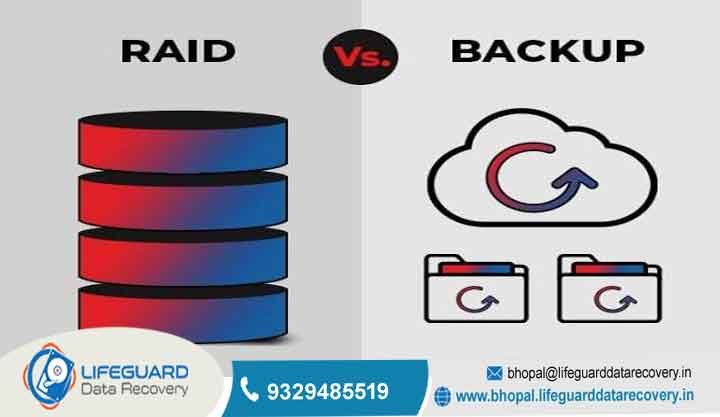
RAID Recovery, NAS Recovery, and Server Recovery: Large-scale commercial installations, such as shopping malls in Dubai, industrial sites in Abu Dhabi, or corporate offices in Sharjah, aggregate hundreds of IP cameras into centralized Network Attached Storage (NAS) configurations, Storage Area Networks (SAN), or multi-drive RAID servers. When a RAID 5, RAID 6, or nested RAID 10 array experiences multiple drive failures, the file system collapses entirely. This failure renders the entire surveillance history inaccessible. Fortunately, our technical department specializes in physical drive repair and logical RAID reconstruction. We manually recalculate parity bits to piece back the broken virtual file structure of the NAS or server environment without causing further degradation to the remaining functional drives.
Common Surveillance Data Loss Situations We Resolve
Surveillance platforms operate in demanding, continuous environments. Therefore, they remain highly susceptible to a broad spectrum of logical, physical, and environmental data loss triggers.
Logical Failures and Deletion Events
Logical failures often occur during routine system management. For example, users might accidentally format the storage drive during routine maintenance. Similarly, operators sometimes execute the intentional deletion of critical incident logs.
Additionally, system software updates can corrupt the internal database index. Consequently, this corruption causes file system truncation during unexpected software shutdowns.
Physical, Environmental, and Loop Damage
Physical damage requires immediate laboratory intervention to prevent permanent data loss. For instance, power surges frequently affect the DVR or NVR mainboards. Meanwhile, water exposure from facility leaks or localized flooding can destroy electronic components.
Furthermore, excessive dust accumulation blocks cooling systems, which leads to overheating. In addition, moving security vehicles or transit systems experience mechanical vibration damage. Finally, continuous loop recording configurations often mistakenly overwrite critical video frames before security teams can export the required evidence data.
How Our CCTV Recovery Process Works: Step-by-Step
Lifeguard Data Recovery employs a rigorous, structured engineering process to ensure maximum data extraction integrity. Meanwhile, we maintain strict safety standards for the source storage media.
-
Secure Intake and Device Isolation: First, technicians extract the storage media from the DVR, NVR, or server and document it under strict chain-of-custody protocols. Then, they immediately write-block the drive to prevent any software tool or operating system from modifying the existing data blocks.
-
Diagnostic Evaluation and Physical Analysis: Next, engineers evaluate the drive in our laboratory to determine the exact failure mode. If they detect physical damage, the drive enters a controlled cleanroom environment where specialists quickly stabilize mechanical components.
-
Bit-Stream Hardware Mirroring: Subsequently, engineers connect the drive to advanced hardware imagers that generate a precise, sector-by-sector copy of the raw storage. As a result, they conduct all subsequent recovery operations entirely on this duplicate clone to keep the original media unaltered.
-
Proprietary File Carving and Structural Rebuilding: After mirroring, engineers parse the raw binary data using advanced algorithms tailored to surveillance file systems. Consequently, they locate hidden video frames, repair broken containers, and assemble separate video fragments into playable files.
-
Integrity Verification and Secure Delivery: Finally, specialists validate the recovered video clips for playback accuracy and structural integrity. Once verified, they transfer the extracted files to a new, encrypted external storage drive and safely deliver them to the client.
Surveillance Recovery Timeframes and Emergency Services
Time represents a critical variable when handling surveillance data breaches or critical operational investigations. Therefore, Lifeguard Data Recovery provides adaptive service tiers designed to align perfectly with corporate urgency levels across the United Arab Emirates.
Our Standard Evaluation process provides a technical diagnostic overview within a predictable business window. This assessment details the exact nature of the failure and the recovery outlook.
Conversely, for critical situations involving active corporate investigations, high-value asset losses, or regulatory audit deadlocks, our 24/7 Emergency Support tier deploys a dedicated team of hardware and structural engineers. This team works continuously on the media until they recover the data.
Consequently, most logical extractions are finalized within 24 to 48 hours. However, complex mechanical stabilization or multi-drive RAID recovery operations fluctuate based on structural integrity and capacity.
Critical Factors That Affect CCTV Recovery Success Rates
The likelihood of fully reconstructing deleted or corrupted surveillance files depends on several technical variables within the physical and logical layers of the device.
The Threat of Data Overwriting
Data overwriting represents the single most influential factor in logical data recovery. Once a system deletes a video file, it marks those sectors as available space.
Therefore, if the camera system continues to record, new video frames will permanently overwrite the old data blocks. Once this occurs, full recovery becomes impossible.
File Fragmentation and Media Degradation
Surveillance systems write multiple video streams simultaneously to a single drive. Consequently, this architecture results in heavy fragmentation, where individual frames of a single video clip scatter across disparate sectors. High fragmentation requires advanced file carving techniques to assemble the data properly.
Meanwhile, severe magnetic platter scratching on hard drives or extensive electronic deterioration of NAND cells on solid-state drives can permanently destroy the raw binary structures. Finally, leaving a damaged or corrupted DVR powered on allows internal operating system logs to continuously write new metadata, which quickly overwrites the very files requiring recovery.
Industries We Serve Across the UAE
Our technical capabilities support a diverse framework of B2B verticals across Abu Dhabi, Dubai, Sharjah, and all other Emirates. This widespread presence ensures industry-specific compliance and technical alignment.
-
Commercial Real Estate and Hospitality: We manage large-scale multi-building surveillance systems across major hotel complexes, residential developments, and commercial office towers requiring constant asset protection monitoring.
-
Banking and Financial Institutions: Our engineers restore lost or corrupted footage from ATM kiosks, vault monitoring arrays, and branch secure zones where data retention remains strictly mandated by central banking compliance standards.
-
Logistics and Free Zone Warehousing: We retrieve critical operational footage from shipping hubs, container terminals in Jebel Ali, and distribution warehouses where businesses require video proof for insurance adjustments and chain-of-custody verification.
-
Retail Sectors and Shopping Complexes: Our lab recovers high-definition multi-stream video feeds from expansive retail floors to support internal risk management and loss prevention inquiries effectively.
Data Security, Confidentiality, and UAE Compliance Standards
Data privacy remains integrated into every single step of our laboratory operations. Lifeguard Data Recovery operates in strict compliance with the UAE Personal Data Protection Law and regional security frameworks governing digital assets.
Furthermore, our laboratory facilities utilize restricted biometric access controls, isolated offline recovery networks, and secure data wiping procedures that meet international standards. We guarantee that sensitive surveillance video involving corporate infrastructure, intellectual property, or personal privacy never faces exposure to external networks or unauthorized personnel.
In addition, non-disclosure agreements protect every corporate engagement. As a result, legal and compliance teams can initiate recovery processes with complete peace of mind.
Comprehensive Data Recovery Coverage Across All 7 Emirates
Lifeguard Data Recovery maintains a robust operational network capable of servicing clients throughout the United Arab Emirates. Whether an enterprise operates centralized infrastructure in Abu Dhabi, high-density distribution centers in Dubai, or manufacturing facilities in the Northern Emirates, our logistics and technical intake pipelines ensure rapid access to our engineering lab.
-
Abu Dhabi: We provide direct access for government ministries, corporate headquarters, and industrial facilities within the capital zone.
-
Dubai: Our team delivers rapid response services for commercial high-rises, financial centers, and global logistics hubs.
-
Sharjah: We offer specialized support for academic institutions, commercial offices, and manufacturing plants.
-
Northern Emirates: Our extended support channels cover Ajman, Fujairah, Ras Al Khaimah, and Umm Al Quwain. Consequently, maritime installations and regional businesses receive professional-grade media recovery without needing to export drives outside the country.
Frequently Asked Questions
What is CCTV footage recovery?
CCTV footage recovery is the specialized engineering process of extracting, repairing, and reconstructing lost, deleted, or inaccessible video data from security surveillance storage devices. This service goes beyond standard file undelete programs by interacting directly with raw drive sectors and proprietary video structures. Technicians use this process to bypass damaged operational code and read the raw video files underneath. Therefore, it represents the only reliable method for recovering data after critical hardware collapses or structural file system corruptions.
How does CCTV data recovery work?
The process begins by stabilizing the physical storage media inside a specialized laboratory environment to fix mechanical or electrical faults. Once stable, engineers create a low-level sector copy of the drive to preserve all remaining binary fragments. Special software utilities then parse the data blocks to find specific structural signatures, video headers, and frame boundaries. Consequently, these isolated elements are assembled back into standard viewable video containers like MP4 or AVI.
Is recovery possible after CCTV footage is deleted or overwritten?
Recovery is highly successful if you isolate the storage media immediately after executing a deletion command. However, if the surveillance system stays powered on and continues to record, new video files will occupy those sectors and permanently overwrite the older data. Once raw binary sectors face overwriting by new video, the original data disappears forever. Therefore, acting quickly represents the most important step to prevent overwriting and ensure a successful recovery.
Can physically damaged surveillance drives be recovered?
Yes, physically damaged hard drives and solid-state drives can be successfully recovered in our specialized laboratory. Mechanical failures, such as damaged read heads or seized spindle motors, are addressed inside cleanrooms using precise component matching. Meanwhile, electrical failures on drive controller boards are fixed by replacing components or transferring ROM chips to functional donor boards. These physical interventions allow engineers to temporarily stabilize the drive long enough to extract its data contents safely.
How long does the surveillance data recovery process take?
The required timeline varies depending on the specific failure type and the storage capacity of the media. For example, standard logical evaluations and file extractions are typically finished within twenty-four to forty-eight hours. However, physical drive reconstructions, complex multi-drive RAID re-striping, or severe ransomware containment tasks may require several business days to complete safely. Fortunately, Lifeguard Data Recovery offers twenty-four-seven emergency engineering services for critical corporate situations that require immediate attention.
What determines the overall success rate of security video recovery?
Success depends mostly on the amount of data written to the drive after the initial loss event. Additionally, the degree of physical damage to the recording surfaces and the use of correct handling protocols alter the outcome. Running automated commercial scanning utilities on a failing drive can worsen mechanical issues and cause permanent data loss. Therefore, keeping the device powered off preserves the exact state of the drive and provides the best foundation for a successful recovery by laboratory engineers.
Why should businesses avoid using free online data recovery software?
Commercial or free online data recovery software is designed for standard file systems like NTFS or FAT32, whereas surveillance systems use custom, proprietary structures. Running generic software on a failing drive can cause continuous read retries that stress weak mechanical parts. Consequently, this stress potentially leads to a head crash and unrecoverable platter damage. Additionally, these programs lack the advanced features needed to correctly reconstruct fragmented, multi-stream video files.
Can video files corrupted by an unexpected power loss be repaired?
Yes, unexpected power losses can cut off video writing processes mid-stream, leaving files broken and unplayable. Our technicians can repair these damaged files by rebuilding the missing metadata blocks, index arrays, and container headers. By comparing the broken files against working video samples from the same recorder, we can fix the alignment issues and make the footage playable again.
How do engineers handle encrypted surveillance data?
When dealing with surveillance data locked by ransomware or system encryption, engineers use sector-level imaging to isolate the raw data blocks from the infected operating system. We then analyze the file structures to extract the unencrypted video streams hidden within the raw data blocks. Consequently, this allows us to recover clean video files without running dangerous malware code or modifying the original storage device.
What is raw data carving in surveillance forensics?
Raw data carving is an advanced extraction technique used when file system directories and index tables are completely missing or destroyed. Engineers scan the raw disk space bit by bit to locate specific binary patterns that represent the start and end of individual video frames. Moreover, this method bypasses the damaged file system entirely, allowing technicians to rebuild usable video files based solely on their internal data patterns.
Understanding the Technology: DVR/NVR File Systems vs. Standard Storage
Standard consumer operating systems utilize file allocation frameworks such as NTFS, exFAT, or APFS. These systems write files sequentially or within organized clusters designed for rapid modification. In contrast, surveillance Digital Video Recorders and Network Video Recorders utilize specialized Linux-based file allocation systems or proprietary stream architectures like DHFS or WFS.
Moreover, these surveillance file systems are designed to write multiple high-definition video channels to storage sectors simultaneously and continuously. This architecture prioritizes continuous write speeds over file organization.
As a result, heavy data fragmentation occurs across individual drive platters. When a deletion happens, standard recovery utilities fail because they cannot interpret these non-standard file architectures.
Furthermore, they cannot reconstruct heavily fragmented video streams. Professional laboratory interventions rely on custom-compiled data parsing templates designed for these specific surveillance systems, allowing engineers to correctly reassemble data blocks into cohesive video files.
Professional Recovery vs. Commercial Software Utilities
Attempting to recover critical surveillance video using downloaded commercial software or unverified internal IT methods carries high operational risks. Commercial data recovery utilities operate by installing software components that can accidentally overwrite the exact sectors containing the deleted footage.
Furthermore, standard software programs lack the necessary algorithms to read proprietary surveillance file structures. This limitation often results in false scans or corrupt, unplayable video outputs.
If a hard drive has underlying physical or mechanical issues, the intense read operations generated by software scanning tools can cause a catastrophic head crash. Consequently, this action scratches the magnetic platters and destroys the data permanently.
Therefore, professional recovery labs utilize physical hardware write-blockers to prevent any data modifications. Meanwhile, they conduct all extraction procedures on sector copies within controlled cleanroom environments, ensuring original media integrity.
Case Study: Enterprise RAID-6 CCTV Recovery in Abu Dhabi
An international logistics firm operating a major distribution facility in Abu Dhabi experienced a critical security event involving asset loss within their main warehouse. When security teams attempted to access the surveillance records, they discovered a major issue. Specifically, the central Network Video Recorder—configured as an eight-bay RAID 6 storage array—had suffered a dual-drive mechanical failure. This failure crashed the storage file system and halted all camera tracking functions. Consequently, the required video clips were completely inaccessible, and the system remained stuck in a continuous reboot cycle.
Therefore, the operators brought the storage array to Lifeguard Data Recovery under our emergency service tier. Our hardware engineers isolated all eight enterprise hard drives immediately. During diagnostics, they discovered that drive three and drive five had suffered read-head assembly failures.
Meanwhile, the remaining six functional drives were cloned sector-by-sector using hardware write-blockers. The two physically damaged drives were brought into our cleanroom environment, where specialists replaced their mechanical head assemblies with matching donor parts. This intervention allowed us to complete a full sector extraction safely.
With all eight drive images secured, our logical analysis team manually recalculated the RAID 6 parity blocks. Consequently, they bypassed the corrupted Linux file system layer and initiated raw data carving using our proprietary surveillance video parser. Within thirty-six hours of receiving the media, Lifeguard Data Recovery successfully reconstructed the missing video files covering the critical timeframe. Finally, the recovered footage was delivered to the corporate client on an encrypted external drive, allowing them to complete their internal investigation and satisfy regulatory reporting obligations.
Expert Insights on Surveillance Architecture and Data Retention
From an engineering perspective, modern digital surveillance storage represents one of the most demanding operational environments for magnetic and digital storage media. Hard drives deployed within security recorders operate under continuous thermal load and non-stop physical write stress.
Consequently, this intense workload accelerates mechanical wear and increases the likelihood of sudden component breakdown. Security administrators can mitigate data loss risks by implementing proactive hardware replacement policies.
Additionally, ensuring adequate cooling within server enclosures and configuring automated alert mechanisms helps identify early drive degradation signs before a full system collapse occurs. When a data loss event does happen, the most effective technical choice is to power off the machine immediately. This action stops the system from writing new data blocks, freezes the current logical state of the media, and ensures that professional data carving techniques can extract the required files with maximum accuracy.
Conclusion: Your Trusted Data Recovery Partner in the UAE
Lifeguard Data Recovery provides enterprise-grade data retrieval expertise, advanced cleanroom facilities, and local regulatory compliance for corporate entities throughout the United Arab Emirates. Our laboratory delivers reliable solutions for complex data loss incidents involving critical surveillance systems, multi-drive enterprise servers, and specialized storage arrays.
Furthermore, we maintain a high success rate by combining advanced hardware diagnostic tools with custom file carving techniques, effectively avoiding generic recovery software shortcuts. Operating from our specialized laboratory facility in Abu Dhabi, we service all seven Emirates with a commitment to data confidentiality, secure handling protocols, and clear operational policies.
Therefore, when your organization faces a critical data loss situation, contact our engineering team to secure your digital assets quickly and professionally.
Contact Channels
-
Call: +971 50 127 6793
-
Email: info@lifeguarddatarecovery.com