+971 50 217 6793 Abu Dhabi, UAE info@lifeguarddatarecovery.com
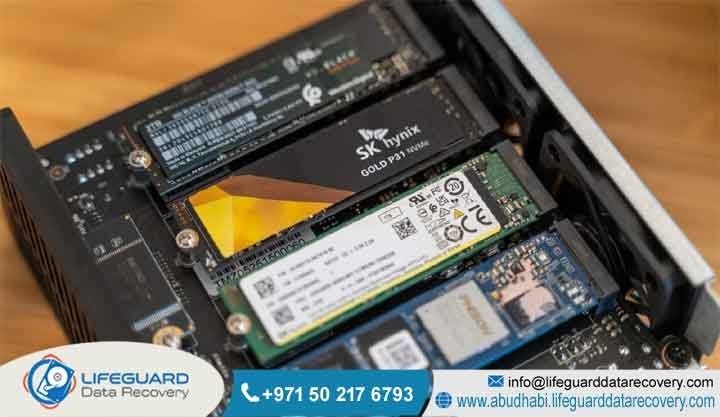
SSD Firmware Corruption
When your solid-state drive suddenly vanishes from your system, you are likely dealing with SSD firmware corruption. As a safety measure, the central storage controller completely locks down.
When this happens, your computer’s operating system cannot detect the drive at all, usually showing zero bytes of storage or displaying a strange generic factory alias instead of your actual drive letter. The good news is that recovering data from a firmware-corrupted SSD is highly successful.
However, you cannot fix this using off-the-shelf software downloaded from the internet. It requires specialized laboratory hardware tools like the advanced PC-3000 SSD system.
This device lets engineers tap into the storage controller through factory technical modes, rebuild missing virtual translation tables right inside the volatile SRAM memory, and safely extract the original files straight from the physical NAND flash chips.
Who is Lifeguard Data Recovery?
If you run a business in the UAE, you know how devastating a sudden server or storage crash can be. That is where Lifeguard Data Recovery comes in. We are an enterprise-tier data preservation and forensic restoration laboratory that has been operating across the United Arab Emirates since 1994.
Over the last three decades, we have built dedicated, state-of-the-art diagnostic testing labs in both Abu Dhabi and Dubai. Our daily work focuses on component-level engineering solutions for highly complex data storage media failures that standard IT teams cannot handle.
Think of us as the ultimate technical safety net in the Middle East corporate infrastructure landscape. These tools allow our engineers to safely open, repair, and reverse-engineer deeply corrupted storage architectures without causing further damage.
Because of this high-level capability, we serve as the primary tier-three technical escalation resource for federal government departments, regional defense contractors, multi-national banks, and major healthcare networks all over the UAE. We understand the regulatory pressures businesses face,
which is why we deliver certified recovery operations that protect your original manufacturer hardware warranties while adhering strictly to regional data sovereignty compliance laws. Beyond recovering standard lost business files, our lab specializes in deep digital forensics and rapid incidence response for large-scale corporate data emergencies.
Why UAE Businesses Choose Lifeguard Data Recovery
When a critical storage node or database array goes down, local enterprises cannot afford to gamble with their data. Businesses here demand absolute structural data reliability, strict alignment with data sovereignty compliance laws, and a flawless track record of confidentiality.
Lifeguard Data Recovery satisfies these rigid enterprise requirements by completely banning consumer-grade recovery software from our workflows. Instead, our team deploys heavy-duty laboratory equipment capable of communicating directly with raw NAND memory chips using vendor-specific low-level commands.
Corporate IT managers across the country trust our engineering team because we have a proven history of resolving severe hardware crashes, multi-drive array corruptions, and hard firmware locking states that leave standard IT departments completely stuck. Every single diagnostic and extraction process we run follows strict zero-write safety protocols.
We also believe in transparent business relationships, which is why we provide clear, upfront fixed pricing alongside our strict No Data, No Charge guarantee. This completely eliminates financial risk for local companies dealing with catastrophic storage downtime.
Our long-term presence in the region means we have built foundational trust with local infrastructure management teams who need immediate, secure, local engineering help right here on the ground without the immense security risks of shipping drives across international borders.
Advanced Data Recovery Services We Offer across the UAE
Modern businesses rely on a massive mix of storage systems to keep their operations moving, and each one comes with its own unique hardware weak spots and software paths. To ensure we achieve the highest possible recovery success rates, Lifeguard Data Recovery maintains separate, highly specialized engineering workflows for every type of media architecture.
Hard Drive Recovery: Mechanical storage requires an incredibly delicate touch. Our engineering facility provides precision component-level electro-mechanical interventions for enterprise hard disk drives suffering from shattered head configurations, seized spindle motors,
SSD Recovery: Flash storage is a completely different beast that requires deep microcode knowledge. Our solid-state technicians manage complex data extraction across all modern physical interfaces and storage protocols. We focus specifically on rewriting crashed storage controller chips, fixing corrupted microcode translation tables, and bypassing highly degraded NAND flash cells on both consumer devices and high-end enterprise drives.
CCTV Recovery: Security footage is often the only clear evidence in major corporate disputes or incidents. We extract lost, deleted, or intentionally overwritten video files directly from multi-channel surveillance digital video recorders and network video recorders, using proprietary raw carving algorithms to piece together broken video streams even when the underlying security file system is non-standard or severely corrupted.
Ransomware Recovery: If your business experiences a damaging cyberattack, our engineers can step in to assist your incident response team. We isolate infected storage environments, map out raw file header blocks, and use advanced cryptographic parsing to pull intact target databases, backup images, and master file directories from lingering system volume snapshots.
SSD and Storage Devices We Recover
Solid-state storage technology has evolved rapidly, resulting in a confusing mix of physical form factors, memory cell designs, and host communication protocols. Lifeguard Data Recovery provides complete engineering support for every hardware specification deployed in today’s corporate environments.
Form Factors and Physical Interfaces: We regularly service standard 2.5-inch SATA form factors, legacy mSATA boards, and modern M.2 layouts including 2242, 2260, and 2280 configurations.
Communication Protocols and Bus Architectures: Our laboratory systems talk directly with legacy Serial ATA, Serial Attached SCSI, standard PCI Express lanes, and the newest high-performance Non-Volatile Memory Express protocols across all major generation revisions.
Our engineers adjust controller firmware variables to match the unique degradation rates found in Single-Level Cell, Multi-Level Cell, Triple-Level Cell, and Quad-Level Cell layouts, as well as complex multi-layer vertical 3D NAND topologies.
Supported Controller Architectures: We maintain a massive library of active vendor command access codes for all major semiconductor controller families, including Phison electronics, Silicon Motion, Samsung proprietary designs, Marvell controllers, Realtek architectures, and Intel enterprise storage processors.
Common Data Loss Situations and SSD Failure Vectors
Unlike old-fashioned mechanical hard drives that give you clear warning signs like clicking, clicking, or grinding noises before they die, solid-state drives fail in total silence and instantly. Understanding how these drives break down allows corporate IT administrators to step in early and halt destructive DIY triage steps before it is too late.
Flash Translation Layer Desynchronization: The Flash Translation Layer is an ongoing, highly dynamic database inside the drive’s firmware. Its entire job is to map logical block addresses used by your operating system to the actual physical locations across the NAND flash cells.
If an abrupt power loss event or sudden voltage drop cuts off the storage controller while it is updating this map, the directory breaks.
Thermal Throttling Fatigue and Joint Fractures: Enterprise NVMe devices running heavy server workloads generate intense heat. Over long periods, the continuous cycle of heating up and cooling down causes the internal components to expand and contract. This creates microscopic solder fractures underneath Ball Grid Array components, completely disconnecting the controller lines from the underlying data bus.
How Our SSD Recovery Process Works: A Step-by-Step Technical Guide
Bypassing a corrupted firmware loop requires a highly systematic, non-destructive approach inside a controlled laboratory environment. Our standardized engineering workflow ensures your data’s physical and logical integrity is completely protected from the moment we receive the drive to the final handover.
Step 1: Safe In-Lab Diagnostics & Safe Mode Emulation
Every single solid-state drive that comes through the doors of our Abu Dhabi lab is immediately connected to a programmable diagnostic power supply for an electrical current analysis. This lets us check for hidden short circuits across the decoupling capacitors before applying full power.
Our engineers then use physical hardware shorting jumpers to intercept the controller’s standard boot sequence. This forces the processor chip into factory safe mode or ROM boot mode before it can read the damaged microcode files stored on the NAND blocks.
Step 2: Firmware Architecture Repair & Controller Emulation
Once the device is stabilized in its factory diagnostic mode, our technicians attach the drive to an active PC-3000 SSD hardware channel. The engineering team then manually injects a custom, volatile software loader module directly into the internal Static RAM of the target controller.
This temporary loader safely overrules the broken onboard code, disables automated background processes like autonomous garbage collection and TRIM optimizations, and unlocks raw, unrestricted access to the drive’s Physical Block Addresses.
Step 3: NAND Flash Memory Chip-Off Imaging (When Required)
Sometimes, the primary controller chip is physically dead from a severe electrical short or uses an unsupported proprietary hardware encryption layout. When this happens, the drive moves to our micro-soldering division. Here, technicians use specialized infrared rework systems to apply precise heat profiles,
disordering the individual BGA NAND flash memory chips directly from the PCB.
Step 4: Secure Data Verification and Delivery
With raw block access safely established through controller emulation or independent chip-off imaging, our engineers use specialized software algorithms to assemble a virtual translation model. This software process aligns the physical data blocks, applies Error Correction Code math to repair read errors,
and parses the master file tables to rebuild the original logical directory tree. All restored files are then copied onto a brand-new, hardware-encrypted external drive, and a comprehensive file report is sent to the client for verification before final handover.
Data Recovery Timeframes: Emergency vs. Standard Solutions
When corporate infrastructure crashes, every hour of downtime means lost revenue and operational chaos. Lifeguard Data Recovery provides flexible, time-critical response tiers designed to match the specific urgency of your business situation.
Standard Evaluation and Recovery Tier: This tier is perfect for non-critical backup drives, archival file shares, and secondary employee workstations. We provide initial diagnostic results within two to three business days, and the complete data extraction process is typically wrapped up within five to seven business days after you approve the quote.
Priority Business Continuity Tier: Built for live business applications and active departmental servers, this tier moves your drive to the front of the line for continuous laboratory access.
Emergency 24/7 Critical Response Tier: Reserved for production-stopping infrastructure outages, mission-critical RAID storage nodes, and severe ransomware crises.
Core Industries We Serve in the United Arab Emirates
Banking, Financial Services, and FinTech Institutions: We provide secure, localized physical data extraction for transactional ledgers, compliance archival files, and sensitive client databases across Abu Dhabi and Dubai, ensuring absolute alignment with UAE Central Bank security guidelines.
Government and Sovereign Infrastructure Authorities: Handling highly sensitive municipal records, civil tracking assets, and public utility control logs requires maximum security. Our lab uses completely isolated, high-security diagnostic workflows to preserve official data integrity without any external exposure.
Oil, Gas, and Energy Production Corporations: We regularly recover vital exploration maps, massive structural seismic data arrays, and real-time refinery monitoring logs from legacy storage arrays, damaged offshore server units, and field-deployed industrial computing platforms.
Healthcare Systems and Medical Networks: Our medical data recovery services safely restore corrupted Electronic Health Record databases, high-resolution diagnostic imaging arrays, and pharmacy inventory systems while maintaining strict compliance with regional health privacy standards.
Aviation, Logistics, and Maritime Transport Providers: We support shipping hubs, major airline operations, and regional logistics providers by recovering tracking systems, cargo manifest histories, and fleet scheduling databases to prevent costly transport blockages.
Data Security, Confidentiality, and Compliance Standards
When you are handing over drives containing sensitive corporate assets, data security must be the top priority. Lifeguard Data Recovery maintains a highly controlled laboratory ecosystem to guarantee that your client data is protected against unauthorized access during every single stage of the recovery process.
Our Abu Dhabi and Dubai facilities utilize strict physical access controls, including biometric authentication, around-the-clock video surveillance, and secure storage safes to safeguard all media assets.
Furthermore, our diagnostic workstations operate entirely on air-gapped network segments with absolutely no external internet connectivity, completely eliminating any risk of inbound malware intervention or outbound data leaks.
Once the client has verified and accepted the successful delivery of their data, these temporary files are permanently purged using high-level data erasure standards. These operational protocols ensure that our enterprise services comply with international data security frame structures and the data protection laws of the United Arab Emirates.
Full UAE Service Coverage: Abu Dhabi, Dubai, and Beyond
To provide comprehensive data security support to the expanding business landscape of the Middle East, Lifeguard Data Recovery provides secure courier-pickup and on-site transport logistics across all seven emirates.
Abu Dhabi and Western Region Coverage: Our main office delivers immediate technical response across the capital city, serving commercial centers in downtown Al Danah, the financial hub on Al Maryah Island, the technological complexes on Yas Island, and industrial sites throughout Mussafah and Al Ruwais.
Dubai Commercial Enterprise Access: Our interconnected commercial logistics network supports corporate offices within the Dubai International Financial Centre, the tech ecosystem of Dubai Internet City, commercial hubs in Jumeirah Lakes Towers, and transport networks across Jebel Ali.
Northern Emirates Logistics Coverage: We maintain daily pickup and transport routes servicing corporate businesses, municipal offices, and academic institutions located in Sharjah, Ajman, Fujairah, Ras Al Khaimah, and Umm Al Quwain.
Frequently Asked Questions About SSD Firmware Corruption
What is SSD Firmware Corruption?
SSD firmware corruption is a catastrophic system condition where the underlying microcode stored in a hidden sector of the solid-state drive becomes unreadable or structurally invalid. This microcode serves as the operating system for the drive controller,
managing all internal functions like data routing, encryption, and flash cell optimization. When these critical software modules break down, the main storage controller can no longer initialize, forcing the entire device into a protective safe mode that cuts off all user data access.
How does SSD Firmware Corruption work?
This breakdown begins when the solid-state drive controller experiences an unexpected disruption, such as an unmitigated voltage drop or a sudden power failure during a background write operation.
leaving a mismatch between the expected metadata check values and physical cell states. Upon the next system power cycle, the controller detects this structural discrepancy during its self-test sequence, terminates its standard boot loop, and displays an unallocated status to the computer host.
How much does SSD Firmware Corruption recovery cost in the UAE?
The total investment required to execute an SSD firmware data recovery operation in the United Arab Emirates varies based on the specific controller model, the encryption complexity, and the required engineering time. Generally,
consumer-grade solid-state drive recoveries range from one thousand eight hundred to three thousand five hundred United Arab Emirates Dirhams, while complex enterprise NVMe systems or encrypted business drives require an engineering commitment that can range higher. Every case begins with an entirely free diagnostic analysis to provide a fixed, binding financial quotation prior to any data extraction work.
How long does SSD firmware data recovery take?
The average turnaround time required to successfully fix an SSD firmware lock and extract data ranges between two and five business days under our standard laboratory workflow. This timeline allows our technicians to analyze the controller architecture,
build a matching virtual translator configuration, and process the raw sector read passes safely. For urgent business situations, our emergency processing tier bypasses standard queues to work on the device continuously, often completing the full extraction in twelve to twenty-four hours.
Is data recovery possible after SSD file deletion or formatting?
Data recovery after intentional file deletion or partition formatting on a solid-state drive is heavily restricted by the operating system deployment of the TRIM command. When a file is erased from an active SSD, the TRIM command instructs the drive controller to wipe the underlying flash cells during background garbage collection cycles to maintain high write performance.
Can physically damaged or unrecognized solid-state drives be recovered?
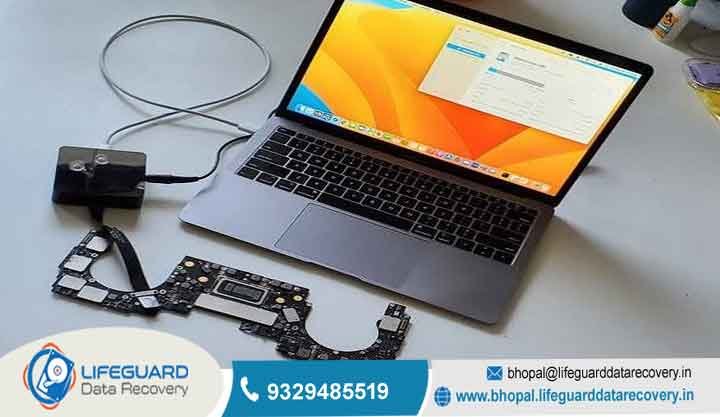
Yes, unrecognized or physically broken solid-state drives can be successfully recovered within a properly equipped laboratory environment. When an SSD fails to register in the computer system BIOS due to burnt board traces, cracked power chokes,
or broken interface pins, our micro-electronics engineers trace out and bridge the broken circuits under high-power microscopes.
What variables affect professional SSD recovery success rates?
The primary variables determining a successful solid-state data extraction include the specific chip model of the onboard controller, the stability of the underlying NAND memory cells, and the history of the drive immediately following the initial crash.
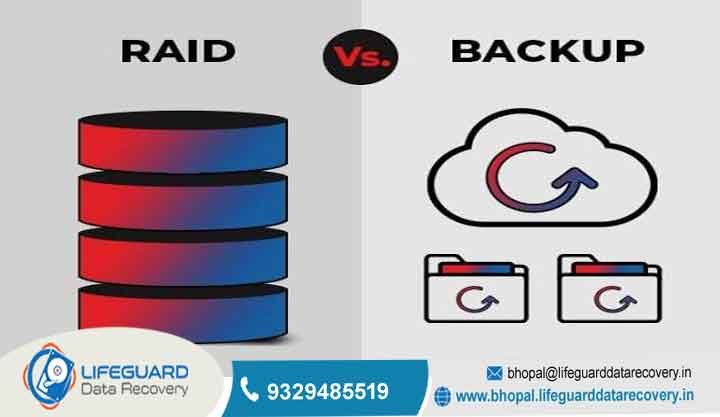
Can failed RAID arrays be repaired?
Our data technicians recover failed arrays by cloning every individual disk sector-by-sector using hardware write-blockers, then manually reassembling the logical array structure within an offline virtual software environment. This methodology extracts the target files without making any changes to the original physical disks.
What determines recovery success?
Data recovery success is determined by the physical integrity of the underlying magnetic layers or flash memory chips where the information is stored. If a hard disk platter has suffered severe surface scoring from a fallen read-write head,
or if an SSD NAND flash chip has shorted out internally and melted, the data on those specific areas is gone forever. For all other failure types, including firmware crashes, electrical damage, and logical file system corruptions, data recovery success is limited only by the tools, expertise, and precision of the engineering team.
Who needs this service?
This service is required by IT directors, corporate systems administrators, digital forensic investigators, and business owners who have lost access to critical data storage infrastructure that cannot be restored from external backups.
When automated storage backups fail, or when primary database servers drop offline due to low-level hardware or firmware corruptions, professional laboratory extraction is the only safe path to retrieve the data without risking permanent data loss.
Entity Based Technical Breakdown: HDD vs. SSD Architecture Failures
To properly evaluate data recovery risk parameters, businesses must understand the fundamental differences between legacy Hard Disk Drive mechanical structures and solid-state drive semiconductor architectures.
Mechanical Hard Drive Failures: HDDs rely on continuous physical movement, utilizing a high-speed spindle motor to spin glass or aluminum platters coated with magnetic material underneath aerodynamic read-write slider heads. Data loss in these units typically stems from physical wear,
such as motor bearing failure, head assembly deformation, or physical scratches on the platter surfaces caused by impacts.
Solid-State Drive Architecture Failures: SSDs contain no moving parts, instead storing information via electrical charge states inside floating-gate or charge-trap transistors configured across multiple silicon chips. Because there are no physical components to wear out, failure points shift to electrical vulnerabilities and complex software processes.
The firmware of an SSD is dynamic, continuously tracking wear-leveling rotations, encryption tables, and physical block placements. This requires specialized hardware commands to fix, contrasting sharply with the physical cleanroom work used for mechanical hard drives.
Professional Laboratory Recovery vs. DIY Linux & Software Methods
When a solid-state drive drops offline, administrators often seek solutions on technical forums like Super User or Reddit, where users frequently recommend open-source Linux command-line utilities or third-party retail data scraping tools. Understanding the limitations and risks of these approaches is vital for corporate data preservation.
The Risk of Retail Recovery Software: Standard commercial data recovery applications are designed to handle logical issues, such as accidental file deletion or partition corruption, on an otherwise healthy, functional drive. These applications rely on the host computer operating system to recognize the drive as a standard storage volume with accessible sectors.
When an SSD suffers from firmware corruption, it cannot initialize its data channels or report its true sector capacity to the host OS. Running retail data applications on a failing drive forces the host system to repeatedly send standard read commands, causing the unstable controller to lock up completely or overwrite remaining data structures.
The Danger of DIY Linux Firmware Flashing: Online forums often suggest using open-source Linux tools to force a factory firmware update onto an unrecognized drive. These utility tools patch the controller code by performing a factory initialization routine, which re-allocates internal sector boundaries and clears the drive translation tables.
While this process may bring the hardware back online, it executes a low-level format across the NAND flash chips, permanently deleting the existing data blocks and rendering professional recovery impossible. True professional data recovery utilizes hardware tools like the PC-3000 to interact with the controller in an isolated diagnostic mode, stabilizing the firmware in SRAM without writing any new data to the flash chips.
Case Study: Resolving an Enterprise SSD Firmware Failure in Abu Dhabi
The following case profile outlines a recent successful emergency data extraction engineered within our Abu Dhabi diagnostic facility.
The Problem Profile: A major engineering consultancy firm based in the Al Maryah Island commercial district experienced an immediate storage failure on a primary NVMe M.2 solid-state drive. The drive contained active project blueprints, client account ledgers, and critical operational contracts.
The local IT department reported that after an abrupt building power fluctuation, the workstation failed to boot, and the system BIOS identified the drive only by its generic controller factory model string, showing a total capacity of zero bytes.
The Laboratory Recovery Process: The drive was immediately delivered to our Abu Dhabi laboratory facility and connected to an isolated diagnostic workstation. Initial electrical checks confirmed that the power management circuits were functioning normally, indicating a firmware failure.
Our team used hardware jumpers to short the device test points, preventing the controller from running its corrupted internal boot sequence and forcing it into factory safe mode. We then launched the matching PC-3000 SSD software module to inject a custom factory loader directly into the drive SRAM.
This suspended background data processes and opened access to the raw data sectors. Our engineers identified severe fragmentation within the physical translation layer blocks, which they carefully rebuilt using a custom virtual mapping configuration.
The Result and Client Outcome: Once the virtual translator was active, the engineering team used a hardware write-blocker data system to create a bit-perfect image clone of the drive contents onto a secure lab server.
Expert Insights: Protecting Corporate Storage from Firmware Degradation
While professional laboratory recovery offers an effective safety net for critical data loss, implementing proactive storage engineering practices can significantly reduce the risk of solid-state firmware failures within corporate IT environments.
Deploy Continuous Uninterruptible Power Supplies: The primary catalyst for solid-state firmware corruption is an unmitigated power loss event occurring mid-write cycle. When an enterprise workstation or NAS array shuts down unexpectedly,
Equipping all critical production hardware with high-quality online double-conversion Uninterruptible Power Supplies guarantees clean, consistent electrical power, allowing systems to perform controlled shutdowns during an electrical failure.
Enforce Proactive Thermal Management Protocols: High-performance NVMe solid-state drives generate substantial heat during intensive read-write cycles. Prolonged exposure to elevated temperatures accelerates data retention degradation within NAND flash transistors and stresses the controller silicon.
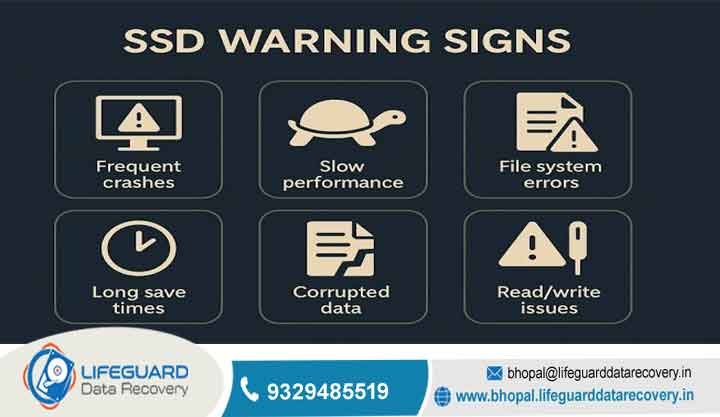
Monitor SMART Health Telemetry Metrics: Solid-state storage devices maintain internal diagnostic tracking logs known as Self-Monitoring, Analysis, and Reporting Technology parameters.
tracking critical indicators such as media wear out percentages, reallocated sector counts, and uncorrectable error logs.
Contact Lifeguard Data Recovery Abu Dhabi for Emergency Support
If your business infrastructure experiences a critical solid-state drive crash, a mechanical hard disk failure, or an enterprise RAID array collapse, immediately power down the affected system to prevent further data degradation. Do not attempt to run software scanning utilities or execute firmware updates on an unstable device. Contact our local data recovery specialists directly to arrange a free laboratory diagnostic evaluation and receive a fixed-price recovery quotation.
Phone Number: +971 50 127 6793 Corporate Email: info@lifeguarddatarecovery.com Official Portal: www.abudhabi.lifeguarddatarecovery.com Abu Dhabi Laboratory Address: Electra Street, 11 Al Raqqay Street, Al Danah, E10, Abu Dhabi, United Arab Emirates