+971 50 217 6793 Abu Dhabi, UAE info@lifeguarddatarecovery.com
What Causes Hard Drive Failure
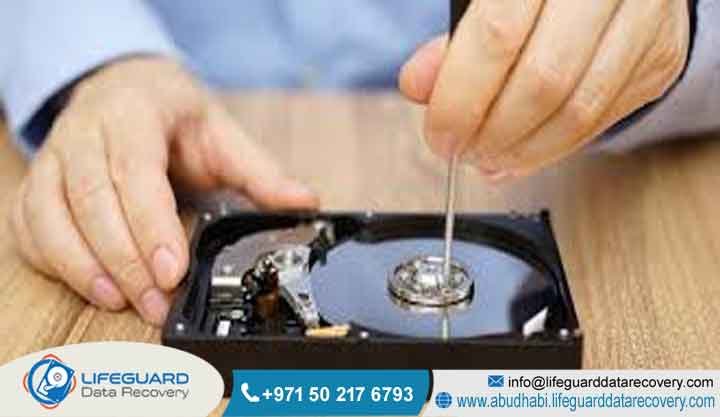
What causes hard drive failure is a combination of mechanical degradation, logical corruption, electrical anomalies, and environmental stressors that render internal storage media unreadable. Hard disk drives rely on moving parts like magnetic platters, read-write heads,
and spindle motors which naturally wear down over time or fail abruptly due to physical trauma. When these components fail, operating systems lose access to data sectors, resulting in system crashes, missing files, or complete storage inaccessibility.
Overcoming these hardware blockages means you cannot just rely on basic recovery software downloaded from the internet. It demands highly specialized cleanroom engineering and hardware-level modifications to manually extract the remaining data layers before total magnetic degradation sets in.
Why Do Hard Drives Fail?
Hard drives fail primarily due to four distinct categories of malfunction: physical mechanical breakdown, logical file system corruption, electrical power surge damage, and environmental degradation. Mechanical failures often involve read write head crashes or spindle motor seizures. Logical failures occur when firmware corruptions, malware infections,
or accidental deletions break down data structures without damaging physical components. Electrical failures obliterate PCB components through power spikes. In the United Arab Emirates,
environmental stressors like extreme heat and ambient humidity accelerate component degradation, necessitating professional intervention from a certified lab like Lifeguard Data Recovery to recover compromised business files.
When you boil it down, your drive is a mechanical ticking time bomb that encounters extreme performance demands daily. If it is not a physical component snapping under intense wear, it is an unstable software line fracturing the integrity of your partition mapping.
For companies operating across the region, a sudden drop in power or an air conditioning failure in the server closet can instantly finish off a vulnerable storage drive. The electronic circuitry on the outside of the casing is incredibly sensitive, meaning a single raw voltage spike can burn out key controllers instantly.
When this happens, local businesses need immediate support from a fully equipped regional laboratory rather than risking unverified recovery methods that permanently wipe the remaining data traces.
Who is Lifeguard Data Recovery?
Lifeguard Data Recovery is a premier enterprise-level data retrieval institution operating natively within the United Arab Emirates. Headquartered in Abu Dhabi, our specialized engineering facility focuses on resolving catastrophic data loss incidents for corporations, government entities, and private clients.
Over years of dedicated service, our organization has established a state-of-the-art laboratory infrastructure designed to handle complex storage array architectures and severely compromised digital media. We do not just run basic consumer software applications; we physically rebuild failed drives from the ground up to guarantee results for our clients.
Our facility integrates certified Class 100 cleanroom environments, specialized hardware emulators, and proprietary software utilities to bypass physical and logical storage barriers. By maintaining direct local operations in Abu Dhabi and serving adjacent hubs like Dubai and Sharjah,
Lifeguard Data Recovery serves as an essential technological anchor in the Middle East information security ecosystem. We ensure that localized, high-tier technical skill is permanently available to safeguard critical digital assets across all major emirates.
This local footprint means your sensitive business data never leaves the borders of the country, maintaining complete regulatory security from start to finish.
Why UAE Businesses Choose Lifeguard Data Recovery
United Arab Emirates enterprises operate within highly competitive, fast-paced commercial frameworks where data downtime results in severe financial and regulatory penalties. Businesses consistently choose Lifeguard Data Recovery because we mitigate these risks through a combination of sovereign domestic operations,
proven technical credentials, and unmatched security parameters. We recognize that sensitive corporate records must remain within national borders to satisfy compliance mandates, making our localized Abu Dhabi facility the preferred alternative to shipping media abroad.
If you hand your media over to an unverified third party who sends it overseas, you lose complete oversight and risk severe compliance violations.
Trust is built upon our strict adherence to international security frameworks, rendering our lab a secure facility for corporate digital forensics and ransomware recovery. Our data handling procedures conform to international standards, incorporating comprehensive physical surveillance, encrypted storage nodes,
and legally binding non-disclosure commitments. Furthermore, our technical team consists of veteran forensic analysts and hardware engineers capable of manipulating damaged platters and recovering corrupt database clusters.
This deep repository of regional expertise guarantees that when critical IT infrastructure collapses anywhere from Dubai to Ras Al Kamiah, our team delivers reliable, safe, and fully audited data extraction services.
Data Recovery Services We Offer in the UAE
Lifeguard Data Recovery provides a comprehensive suite of storage restoration and investigative digital services tailored to address complex enterprise failures throughout the UAE.
Our engineering laboratory possesses the specific equipment and technical specializations needed to reconstruct lost or inaccessible information across multiple engineering disciplines.
We have invested heavily in our local engineering facility so that your team does not have to deal with multiple distinct vendors when a major multi-system outage strikes your corporate network.
Our primary technical offerings encompass the following advanced service sectors:
Hard Drive Recovery: Complete mechanical and logical restoration of traditional platter-based internal and external storage drives that have suffered physical impacts, component wear, or electronic failure.
SSD Recovery: Specialized extraction of data from solid-state storage devices, utilizing advanced flash memory cell manipulation to resolve controller failures, bad NAND blocks, and firmware corruptions.
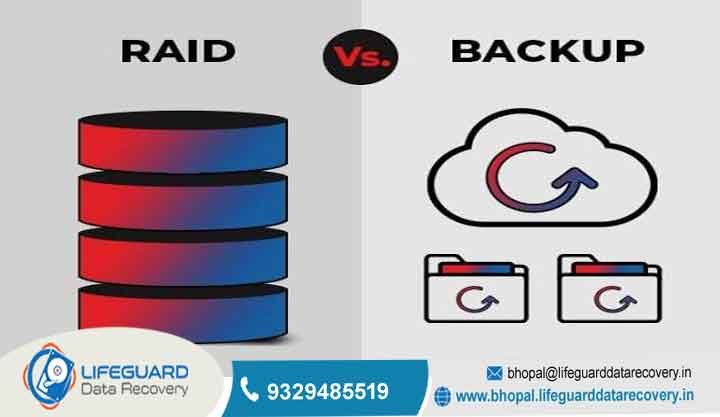
RAID Recovery: Advanced rebuilding of multi-drive redundant arrays, including complex configurations like RAID 0, RAID 1, RAID 5, RAID 6, and RAID 10, without risking further parity breakdown.
Server Recovery: Comprehensive emergency data retrieval for enterprise mainframes, virtualized server environments, and database applications that have experienced critical storage infrastructure collapses.
NAS Recovery: Precision extraction from Network Attached Storage units from major corporate vendors, correcting file system corruption, controller failures, and accidental volume deletions.
Enterprise-Grade RAID and Server Recovery
Enterprise server configurations require highly specific operational approaches due to the intricate way data is striped across multiple physical drives. When a corporate RAID array or network storage system collapses, simple software utility fixes are entirely insufficient and often destructive.
Lifeguard Data Recovery possesses specialized internal hardware controllers and virtual reconstruction tools that allow our engineers to mirror every individual drive sector within the array prior to logical rebuild analysis. If your local IT team attempts to force a rebuild on a degraded array, they can instantly cause permanent parity corruption across all surviving storage disks.
We understand the architecture of enterprise file systems and container frameworks, including VMware vSphere ESXi, Microsoft Hyper-V, and Linux-based Logical Volume Managers.
Our lab can reconstruct degraded parity arrays even when multiple drives fail simultaneously within a single cluster. By bypassing physical controller dependencies, we successfully extract critical SQL databases, Enterprise Resource Planning systems,
and unstructured network shared data, ensuring business continuity for major organizations across the UAE. We treat your server downtime like the true commercial emergency it is, working tirelessly to get your operations back online safely.
Advanced Digital Forensics and Ransomware Decryption
Cybersecurity incidents require a delicate combination of analytical forensic methodology and specialized data recovery engineering. Our advanced digital forensics division provides corporate entities and legal institutions with a verifiable chain of custody for all processed storage media.
We utilize specialized write blocking hardware to ensure that metadata, file modification timestamps, and system logs remain entirely unaltered throughout the forensic imaging process. This level of technical precision is absolutely vital if the extracted files are destined to be used during high-stakes court proceedings or structural corporate disputes.
In scenarios involving ransomware deployment, our engineers work to isolate infected storage blocks, prevent secondary payload execution, and extract unencrypted shadow copies or lingering remnants of database files. We dissect specialized file system sectors to identify hidden partitions,
trace unauthorized data exfiltration footprints, and reconstruct intentionally purged system histories. This rigorous technical process gives UAE businesses the clear forensic insights and data restoration paths required during high stakes corporate investigations or post-breach recovery efforts. We ensure you have the hard facts needed to protect your firm.
Devices and Storage Media We Recover
Our technical competence spans the entire spectrum of legacy and contemporary digital storage devices used in enterprise environments and personal workstations. We service traditional mechanical assemblies,
complex modern flash structures, and hybrid cloud-edge storage implementations. No matter how outdated or advanced your storage infrastructure happens to be, our local team has the exact tools required to interface with the media safely.
We regularly receive and successfully recover data from the following device types:
Enterprise Hard Disk Drives: High-RPM SAS, Near line SAS, and Fibre Channel drives utilized in enterprise data centers and mission-critical server environments.
Consumer Workstation Storage: Standard SATA internal 3.5-inch desktop drives and 2.5 inch laptop drives from all primary manufacturers.
Solid-State Media: NVMe PCIe M.2 modules, SATA M.2 sticks, mSATA units, and traditional 2.5-inch SSDs exhibiting controller failures.
External Portable Storage: USB 3.0, USB C, and Thunderbolt desktop and portable external enclosures subjected to accidental drops or electrical shock.
Network Attached Enclosures: Multi bay NAS towers and rackmount systems utilizing proprietary storage management layouts.
Embedded Enterprise Media: Flash memory chips, industrial compact flash cards, SD media, and embedded MMC chips integrated into proprietary network routers or data loggers.
Understanding the Root Causes of Hard Drive Failure
To effectively recover data, an engineer must first comprehend the underlying physical, chemical, or systemic anomalies that caused the storage device to break down.
Hard disk drives are highly complex micro mechanical instruments that operate under microscopic tolerances, where even minor component deviations cause total system collapse. Think of it as an aircraft flying inches off the ground at supersonic speeds; any tiny disruption will lead to a catastrophic crash.
Logical Failure vs. Physical Mechanical Failure
A logical failure occurs when the mechanical components of the hard drive remain perfectly functional, but the organizational data structures become unreadable. This typically involves corruption of the Master Boot Record, partition table destruction, file system directory damage, or the accidental execution of low level formatting commands.
Software bugs, OS crashes during write cycles, and malware interventions are the most common catalysts for logical data loss. The drive spins perfectly and sounds healthy, but the computer simply cannot find the path map required to open your folders.
Conversely, a physical mechanical failure involves the direct structural breakdown of the drive’s internal moving components. This category includes a head crash, where the read-write slider drops out of its microscopic air cushion and makes direct physical contact with the spinning magnetic platters, permanently gouging the data bearing substrate.
Spindle motor failure, often caused by worn bearings or mechanical seizure, prevents the platters from reaching their required operational velocity, making it impossible for the drive electronics to initialize or read servo markers. When this happens, you will usually hear distinct clicking, scraping, or buzzing sounds coming directly from inside the metal drive casing.
Environmental Factors: Heat, Humidity, and Power Surges in the UAE
The operating climate within the United Arab Emirates presents distinct environmental challenges that accelerate the degradation of digital storage hardware. High ambient outdoor temperatures frequently cause localized cooling failures within corporate server closets and workstation environments.
When an operational hard drive exceeds its maximum rated thermal threshold, the internal metal alloys experience micro-expansion, which disrupts the precise tracking alignment of the read-write heads over the magnetic tracks. If your server room AC goes offline for even an hour during the peak summer months, your drives are placed under immense physical structural duress.
Furthermore, ambient humidity levels can introduce fine moisture entry into non-hermetically sealed drives, accelerating the oxidation of internal components and the breakdown of lubrication layers on the platters. Electrical grid instability, caused by heavy HVAC consumption during peak seasonal periods,
can also introduce rapid power surges and voltage drops. These electrical fluctuations can instantly destroy the drive’s external Printed Circuit Board (PCB), burning out protective TVS diodes, smooth filtering capacitors, and main controller chips, which occasionally pushes destructive electrical overstress straight into the internal head stack assembly. This renders the drive completely dead to the host computer system.
Common Data Loss Situations and When to Contact Us
Data loss incidents can happen at any moment, but knowing exactly when to stop operating a drive determines whether the data can be saved. Continued operation of a compromised drive often causes irreversible,
permanent data destruction. If you keep turning a failing drive on and off hoping it will magically fix itself, you are actively grinding away the microscopic magnetic layers that hold your vital files.
Organizations and individuals should immediately disconnect power and contact Lifeguard Data Recovery when encountering the following scenarios:
The hard drive emits repetitive clicking, grinding, scraping, or ticking noises upon initialization.
The operating system displays persistent Blue Screen of Death errors referencing inaccessible boot volumes or bad sectors.
A multi-disk RAID array alerts the IT staff that more than one drive has dropped offline or entered a degraded state.
Files or complete directories vanish unexpectedly from network shares, or file extensions change due to ransomware encryption.
A storage device has been dropped, subjected to liquid exposure, or caught in an electrical short-circuit event.
The system BIOS or UEFI panel fails to recognize the storage drive’s model number and capacity during the initial power-on self-test.
How Our Data Recovery Process Works (Step-by-Step)
Lifeguard Data Recovery follows a strict, highly controlled technical protocol to ensure the absolute safety and preservation of your data throughout every phase of the restoration cycle.
Step 1: Intake and Initial Media Preservation Upon arrival at our Abu Dhabi facility, the drive is logged into our secure tracking database, assigned a unique tracking code, and immediately placed in a static-shielded storage container to prevent secondary electrostatic damage. This step ensures an unbroken chain of custody for your sensitive data records.
Step 2: Diagnostic Evaluation and Physical Inspection Hardware engineers inspect the external PCB for electrical burns and open the drive casing inside a Class 100 cleanroom if internal damage is suspected. This process identifies head alignment status, platter integrity, and firmware stability without risking particulate contamination.
Step 3: Component Replacement and Physical Stabilization If mechanical damage is confirmed, our team replaces failed read-write heads or seized spindle motors inside the cleanroom using exact donor parts from our extensive matching hardware inventory. This is highly delicate work requiring microscopic alignment precision.
Step 4: Firmware Repair and Microcode Modification Engineers connect the stabilized drive to advanced hardware imaging stations to fix corrupted firmware modules, clear service area bugs, and adjust internal read-write parameters to stabilize access. This bypasses the drive’s internal error-handling loops which often cause freezes.
Step 5: Logical File System Reconstruction and Validation Our data analysts use the bit-stream image clone to virtually rebuild the corrupted partition structures, extract the target file directories, and thoroughly check the integrity of the recovered databases. This ensures your files open correctly without corruption issues.
Expected Recovery Timeframes for Business Critical Data
The duration of a data recovery procedure is strictly dependent on the specific type of failure, the physical capacity of the storage media, and the selected service tier. It is important to understand that physical drive stabilization cannot be rushed, as data extraction speeds are limited by the physical health of the underlying magnetic media. If a drive has thousands of fading sectors, forcing it to read too quickly will simply destroy the remaining functional areas before the clone is completed.
Standard Evaluation and Recovery: Typically completed within three to five business days, which provides sufficient time for comprehensive logical rebuilding, thorough sector scanning, and standard component alignment procedures.
Emergency Recovery Service: Operates on a continuous 24/7 basis, with engineers working non-stop to stabilize hardware and extract critical data within twenty-four to forty-eight hours. This service tier is designed for active corporate mainframes, production databases, and critical operational servers.
Logical Data Extraction Timeframes: Simple logical corruptions or file deletions on physically healthy drives can often be completely resolved within twenty-four hours of diagnostic approval.
Complex Physical and Cleanroom Recovery: Severely damaged media requiring custom donor matching, platter transplantation, or extensive firmware module reconstruction can require seven to ten business days to achieve maximum data yield.
Key Factors Affecting Data Recovery Success Rates
The likelihood of a successful data recovery operation relies heavily on the events that occur between the initial device malfunction and the point of professional analysis. Data recovery success is not an arbitrary variable;
it is governed by physical media conditions and operational decisions. Think of it like emergency medical care; the things you do right after the injury happens determine the final recovery outcome.
Media Integrity and Platter Scratches: The presence of concentric rings or deep scratches on the magnetic surface of a platter entirely removes the magnetic storage layer, making those specific sectors permanently unrecoverable. If the head has carved a deep physical trench into the disk, that data is physically gone forever.
User Intervention and DIY Software: Attempting to run commercial software utilities on a physically clicking drive forces the damaged heads to scrape repeatedly across the platters, rapidly destroying viable data areas. Software cannot patch a broken metal arm; it only worsens the physical trauma.
Prompt Power Disconnection: Instantly disconnecting power from a failing drive limits the spread of mechanical damage, drastically improving the final recovery success rate. The faster you kill the power, the safer your internal files remain.
Previous Lab Opening Attempts: Drives that have been previously opened outside of a certified cleanroom environment suffer from dust contamination, requiring intensive cleaning cycles that can lower success rates. Ambient dust particles look like giant boulders to a drive’s read head.
Industries We Serve across the United Arab Emirates
Our enterprise infrastructure is built to handle the unique compliance, privacy, and technical needs of various professional industries throughout the UAE. We deliver specialized recovery protocols tailored to satisfy the operational mandates of each specific industry vertical. We don’t use a one-size-fits-all model because we know a medical clinic operates under completely different guidelines than an oil drilling platform or a legal firm.
Government and Public Sector: Secure, localized handling of municipal, state, and regulatory agency storage infrastructure, ensuring complete domestic compliance within Abu Dhabi and Dubai.
Banking and Financial Institutions: High-security data retrieval for transaction servers, ledger storage arrays, and compliance tracking volumes under strict non-disclosure oversight.
Healthcare and Medical Providers: HIPAA-aligned recovery of patient history systems, hospital management servers, and high-resolution medical imaging archives.
Oil, Gas, and Energy Sectors: Restoration of seismic mapping data, industrial SCADA system logs, and remote exploration field logging storage units.
Legal and Corporate Firms: Fast digital forensic processing and data extraction to support litigation schedules, corporate disputes, and evidence preservation.
Aviation and Logistics Corporations: Continuous support for transit logging databases, fleet management arrays, and supply chain tracking hubs across major transport zones.
Data Security, Confidentiality, and Compliance Standards
Data security is the foundational element of our lab operations at Lifeguard Data Recovery. We treat every corporate storage drive as a highly sensitive asset containing protected operational data, proprietary source code, or confidential customer information.
Our physical facility is monitored around the clock by biometric access controls and continuous video surveillance to prevent unauthorized entry.
All data cloning and reconstruction operations are performed on completely isolated, air-gapped network segments that have no connection to the public internet, preventing any external data leakage or malware transmission. Our engineering team operates under legally enforceable non-disclosure agreements,
and recovered files are stored on heavily encrypted storage arrays while awaiting client verification. Once the verified data is transferred to the client and the retention period expires, all temporary lab clones are securely wiped using industrial overwrite standards, ensuring absolute compliance with corporate governance frameworks.
Comprehensive Data Recovery Coverage Across the UAE
Lifeguard Data Recovery provides complete logistics and technical intake capabilities across the entirety of the United Arab Emirates. Our central laboratory infrastructure efficiently receives, diagnoses,
and services storage drives from every geographic emirate. You don’t have to worry about transport complications; our secure courier options bring your failed hardware straight to our main testing facility safely.
Our service network provides comprehensive coverage across the following regions:
Abu Dhabi: Our central laboratory location handles all enterprise server, RAID, and primary physical cleanroom operations for the capital.
Dubai: Fast courier collection networks and dedicated drop-off configurations support businesses in the major commercial hubs.
Sharjah: Complete data recovery support for industrial sectors, corporate entities, and private clients requiring fast turnaround times.
Ajman: Accessible media intake pathways and rapid diagnostic evaluations for academic institutions and commercial enterprises.
Fujairah: Secure shipping coordination and specialized engineering access for maritime, logistics, and regional energy firms.
Ras Al Kamiah: Comprehensive corporate data retrieval services supporting manufacturing facilities and local business offices.
Umm Al Quwain: Reliable data recovery solutions and technical support channels for local public services and private business entities.
Frequently Asked Questions & Entity-Based Inquiries
What is Hard Drive Failure and how do I spot it?
Hard drive failure is a state where a storage device can no longer read or write data due to mechanical, logical, or electronic malfunctions. You can identify this condition by listening for unusual clicking or grinding sounds, noticing sudden system crashes, or encountering errors stating that the boot device is missing.
When these issues occur, the drive will stop communicating with the computer’s motherboard, and the system may freeze during initialization. Promptly recognizing these warning signs allows you to turn off the system before physical damage worsens. The worst thing you can do is leave it running while it struggles.
How exactly does Hard Drive Failure work on a mechanical level?
On a mechanical level, a hard drive failure typically happens when the internal read-write heads lose their stable aerodynamic lift above the spinning magnetic platters. These platters spin at speeds up to 15,000 RPM, and the heads hover just nanometers above the surface on a precise cushion of air.
If the drive experiences physical movement, vibration, or bearing wear, that air cushion can break down, causing the head to hit the platter surface. This physical contact scrapes away the magnetic coating containing your data, creating fine debris that causes additional damage across the remaining disk sectors. Think of it like a micro-impact that leaves permanent physical scars across your files.
How much does data recovery cost in the UAE?
Logical recoveries are generally less expensive, whereas physical mechanical failures requiring complete head replacement components inside a cleanroom require a higher financial investment. Lifeguard Data Recovery provides an accurate cost breakdown through a free initial diagnosis,
operating under a strict no-data, no-charge guarantee to protect our clients from financial risk. We make sure you know exactly what to expect before any work begins.
Is data recovery possible after permanent file deletion?
Yes, data recovery is highly achievable after permanent file deletion, provided that the storage media is not subjected to continued write operations after the deletion event.
If the device remains powered on and running, new system files, browser caches, or temporary documents will overwrite those unallocated sectors, destroying the original data. Turning off the drive immediately preserves these data paths, allowing forensic software to reconstruct the original directory pointers. It keeps the structural ghost of your file intact so we can find it.
Can severely physically damaged drives be recovered?
Severely physically damaged drives can often be recovered if the magnetic platters have not suffered catastrophic surface wear or shattering. Even if a drive has experienced water exposure, fire damage, or severe drops, our cleanroom engineers can extract the platters, clean them using chemical solutions, and transplant them into a functional donor chassis.
Success depends on the physical condition of the magnetic layer on the platters. As long as that reflective surface is intact, there is always a path to victory.
What factors most heavily affect data recovery success rates?
The primary factor affecting the success rate of a data recovery operation is the user’s actions immediately following the initial failure.
Working with a professional laboratory right from the start ensures the highest probability of an optimal data recovery outcome. Taking matters into your own hands usually ends poorly.
Hard Drive vs. SSD Failure: A Comparison for IT Managers
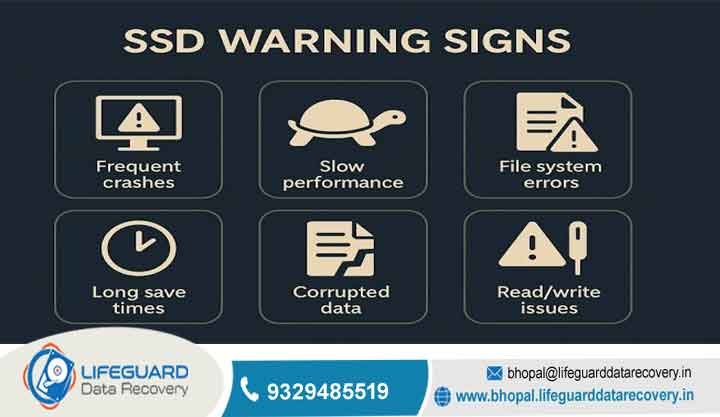
IT managers must adopt different recovery approaches for Hard Disk Drives (HDDs) and Solid-State Drives (SSDs) because their underlying architectures are fundamentally different. HDDs are mechanical devices that exhibit clear warning signs before failure, such as audible clicking, slow read times, and increasing bad sector counts.
These symptoms give administrators a brief window to back up or clone data before the drive fails completely. In contrast, SSDs rely on flash memory chips and complex controller microcode, and they often fail abruptly without any prior warning.
An electronic component failure or firmware corruption on an SSD can instantly render the entire device unreadable. One second your drive is working perfectly, and the next it has completely vanished from the system tree.
From an engineering perspective, recovering data from these two media types requires completely different skill sets and specialized equipment. HDD recovery frequently requires mechanical work inside a Class 100 cleanroom to replace physical components like damaged head stacks or seized spindle motors. SSD recovery,
however, focuses on electronic and algorithmic solutions. When an SSD controller fails, engineers must disorder the individual NAND flash chips, read their raw data hex content using advanced hardware programmers,
and manually reverse-engineer the proprietary wear-levelling algorithms used by the controller chip to rebuild the original file system structure. It is a highly complex puzzle that requires deep programming skills rather than mechanical tools.
Case Study: Recovering a Failed RAID 5 Server in Abu Dhabi
Problem and Operational Impact: A major construction management corporation based in Abu Dhabi experienced a sudden collapse of its central file server, which housed five years of engineering blueprints, project contracts, and essential financial records.
The server used a RAID 5 array consisting of four 4TB corporate SAS hard disk drives. Due to a cooling fan failure in the server room during a period of high summer heat, the drive temperatures spiked rapidly,
causing drive two and drive three to drop offline within minutes of each other, collapsing the array and halting all business operations. They delivered the failed array to the Lifeguard Data Recovery lab in Abu Dhabi under our emergency service tier.
Recovery Process: Our cleanroom engineers opened drive three inside our certified Class 100 cleanroom, carefully removed the damaged head assembly, cleaned the platters to remove microscopic debris, and installed a matching donor head stack.
allowing us to capture a bit-stream clone of 94 percent of its sectors before the donor assembly degraded. We then imaged the remaining stable drives and loaded all four clones into our virtual reconstruction environment, manually calculating the original stripe size, block order, and parity settings to reconstruct the damaged array virtually. Our team worked straight through the night to build out the missing parameters.
Result and Client Outcome: Through this precise process, our team achieved a 99 percent data recovery yield, fully restoring the client’s critical corporate files, databases, and structural contracts.
allowing them to submit their project bids on time and avoid severe operational disruption. The construction firm saved millions in potential penalty fees, all because they made the right decision to hand the broken server hardware directly to an experienced local team.
Expert Insights: Proactive Steps to Prevent Media Degradation
True data security relies on proactive storage management rather than relying solely on emergency post-crash data recovery. Our engineering team emphasizes that all mechanical and solid-state storage devices have finite lifespans and will eventually fail. To minimize the risk of sudden data loss,
IT departments should deploy continuous SMART monitoring tools to actively track drive temperatures, reallocated sector counts, and spin-up times, allowing them to replace degrading drives before they fail completely. If you wait until the system drops offline entirely, you are playing Russian roulette with your company’s core data records.
In addition, managing environmental conditions is critical for prolonging the operational lifespan of your hardware.
Using high-quality online Uninterruptible Power Supplies (UPS) protects your storage infrastructure from localized power surges and voltage drops that can damage drive electronics. Ultimately, combining a clear hardware management strategy with an automated, multi-location backup plan ensures your business remains resilient against unexpected drive failures. Prevention is always more affordable than a major post-crash rescue mission.
Secure Your Business Data: Contact Lifeguard Data Recovery UAE
If your organization is currently experiencing a critical storage media failure, data corruption event, or mechanical hard drive malfunction, do not risk your data by attempting unverified software fixes or repeated power cycles. Turn off your equipment immediately and contact the engineering specialists at Lifeguard Data Recovery to secure your digital assets.
Our local team is available to guide you through our secure intake and diagnostic procedures, ensuring your data is handled with maximum care and professional expertise. We have spent years perfecting our recovery processes so that you can face a data loss crisis with complete peace of mind.
Contact our diagnostics team through the following official channels: Call: +971 50 127 6793 Email: info@lifeguarddatarecovery.com Visit: www.abudhabi.lifeguarddatarecovery.com