+971 50 217 6793 Abu Dhabi, UAE info@lifeguarddatarecovery.com
What Is RAID Data Recovery?
RAID data recovery is a specialized technical process used to salvage lost, inaccessible, or corrupted data from Redundant Array of Independent Disks (RAID) configurations. What Is RAID Data Recovery,
Unlike single-drive recovery, this advanced engineered procedure requires rebuilding the precise original structure of the failed multi-disk array by deciphering intricate striping blocks,
parity distributed maps, and file system architectures. Lifeguard Data Recovery executes physical mechanical adjustments inside certified cleanrooms and utilizes advanced hex extraction software to mirror individual components, safely restoring critical enterprise files without causing additional degradation to the storage medium in the UAE.
Who is Lifeguard Data Recovery?
Think of it this way: when an enterprise storage system fails, a business does not just lose files. It loses time, revenue, and operational momentum. Operating with advanced laboratory facilities,
the organization specializes in resolving catastrophic storage failures for government entities, corporate enterprises, financial institutions, and small-to-medium businesses. Since its establishment, the company has built its digital and physical infrastructure to cater specifically to the complex data demands of the United Arab Emirates.
The company manages data extraction from highly complex enterprise structures, combining physical engineering with cryptographic and logical file system reconstruction. As a key local entity, Lifeguard Data Recovery bridges the technical gap between hardware manufacturers
and local businesses requiring immediate on-shore data recovery solutions. By retaining physical laboratories within the UAE, the organization ensures that sensitive corporate assets never cross international borders, directly satisfying national cybersecurity regulations and corporate governance standards.
Why Businesses Choose Lifeguard Data Recovery
United Arab Emirates enterprises operate under demanding regulatory frameworks and continuous business schedules that do not tolerate prolonged infrastructure downtime or compromised data assets. Corporate entities select Lifeguard Data Recovery because the firm maintains an exhaustive collection of proprietary hardware components,
controller emulators, and specialized high-speed matching tools needed to execute high-stakes server recovery operations without reliance on third-party international processing centers.
The truth is, general consumer IT workshops or unverified online recovery software alternatives simply cannot handle large-scale corporate crises. Lifeguard Data Recovery addresses the specific content and technical gaps present in the local marketplace by providing verifiable certified cleanroom facilities. The firm provides transparent B2B alignment,
formal non-disclosure agreements, and clear communication pipelines that legal departments require before permitting forensic work on corporate storage nodes. By employing engineers specializing in digital forensics and ransomware recovery, the firm treats every single drive architecture as a critical forensic exhibit, maximizing the precision of every read-write head replacement and system parity mapping.
Data Recovery Services We Offer
In the real world, storage problems come in all shapes and sizes. That is why Lifeguard Data Recovery delivers an array of specialized technical recovery options designed to manage diverse digital storage failures across corporate networks.
RAID Recovery: Reconstruction of collapsed arrays including RAID 0, RAID 1, RAID 5, RAID 6, RAID 10, and mixed nesting levels by resolving broken stripe patterns and missing parity blocks.
HDD Recovery: Mechanical engineering interventions on traditional magnetic hard disk drives to resolve failed spindle motors, damaged actuator arms, and degraded read-write head assemblies inside class-100 cleanrooms.
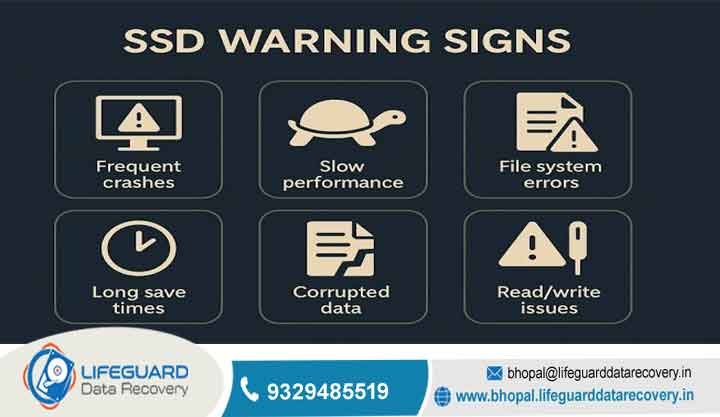
SSD Recovery: Micro-soldering and NAND flash chip-off procedures targeting solid-state storage device controller failures, firmware corruptions, and electric surge damage.
NAS Recovery: Extraction of networked multi-drive systems managed by custom Linux configurations, proprietary software thin-provisioning, and complex logic volumes.
Server Recovery: Rapid deployment for failed physical or virtual server infrastructures, database systems, enterprise Exchange architectures, and mainframes.
CCTV Recovery: Forensic carving of video storage arrays from security monitoring units following security breaches, physical vandalism, or deliberate deletion.
Digital Forensics: Chain-of-custody certified examinations of storage media to gather legally defensible evidence for corporate disputes and cyber incident analyses.
Ransomware Recovery: Advanced decryption assessments, malicious payload identification, and safe clean data extraction from compromised backup arrays and active network volumes.
Devices and Configurations We Recover
The technical team possesses comprehensive experience working with multi-drive hardware ecosystems manufactured by global industry leaders, including Dell PowerEdge, HPE ProLiant, Lenovo Think System, IBM System x, Synology, QNAP, Buffalo Tera station,
Assistor, Net gear Ready NAS, Western Digital My Cloud, and custom white-box storage arrays. No matter who made the box, our team has likely spent thousands of hours rebuilding its architecture.
Engineers regularly execute recovery protocols across all established logical array configurations and physical block arrangements. This includes standard striped patterns without redundancy such as RAID 0, basic mirrored configurations like RAID 1, and highly popular enterprise implementations including RAID 5 with distributed single parity and RAID 6 with distributed dual parity blocks.
Additionally, the team salvages high-performance nested topologies such as RAID 10, RAID 50, and RAID 60, alongside proprietary automated layout management systems like Synology Hybrid RAID or specialized storage pool architectures utilized within multi-tenant cloud operations.
The lab reconstructs files written to all mainstream enterprise and legacy formats, including Microsoft NTFS, ReFS, Apple APFS, HFS+, Linux Ext2, Ext3, Ext4, XFS, Btrfs, VMware VMFS, and ZFS.
This comprehensive compatibility ensures that whether a system utilizes enterprise-grade SAS mechanical drives, high-throughput NVMe SSD devices, or legacy SCSI components, the physical and logical layout can be mapped perfectly back to its original uncorrupted form. We make sure every format is accounted for.
Common Data Loss Situations
Data availability across multi-drive configurations can instantly terminate due to a variety of mechanical, logical, environmental, or human factors. Systems crash. Drives fail. Understanding these specific event categories determines whether a company can safely retrieve its intellectual property.
Simultaneous Multiple Drive Failures: The primary mechanical cause of array collapse occurs when more drives fail than the configuration’s parity allocation can tolerate, often triggered by a second drive failure during the high-stress reconstruction of a degraded array.
RAID Controller Malfunctions: Physical failure of the controller card, firmware mismatching during updates, or battery-backed write cache failures that write corrupt metadata blocks across the system.
Accidental Initialization and Formatting: Operational human errors where system engineers select the incorrect array volume during maintenance, creating new clean metadata tables over original directory records.
Severe Ransomware Infiltrations: Malicious cryptographic payloads that propagate across storage area networks, encrypting both the live operational volumes and connected physical backup pools.
Power Surges and Facility Flooding: Severe environmental incidents that cause electrical destruction to multiple drive PCBs or physical water contamination inside the internal mechanical chambers of the drives.
How Our Recovery Process Works
Lifeguard Data Recovery employs a rigorous, multi-stage engineering workflow to isolate hardware damage and extract original logical volumes securely. We leave nothing to chance.
Step 1: Non-Invasive Diagnostic Evaluation
Engineers place every single drive from the array into specialized hardware-level write-blocker diagnostic equipment to safely test electric current, read-write head continuity, and firmware stability without writing a single bit of new data to the media.
Step 2: Cleanroom Physical Repair and Component Matching
Drives exhibiting physical clicks, seized bearings, or burned circuits are transferred to an internal Class-100 cleanroom where engineers replace defective mechanical components with identical match-donors sourced from an extensive inventory.
Step 3: Bit-by-Bit Sector Cloning
Once stabilized, every drive undergoes exhaustive binary sector cloning to high-capacity lab target storage, isolating the compromised production media from any further processing strain.
Step 4: Virtual Logical Array Reconstruction
Using the complete binary clones, specialized engineering software arrays simulate the missing controller, determining the correct block size, stripe order, offset values, and parity rotation parameters manually.
Step 5: File System Integrity Verification and Extraction
The reconstructed virtual volume is validated against corruption, file headers are parsed, and the verified target data is safely extracted to a secure, encrypted lab storage system for customer audit.
Recovery Timeframes
Every multi-drive data loss scenario presents unique physical and logical complications that directly dictate total processing durations. Minutes matter when an entire facility is idling. Lifeguard Data Recovery provides distinct tiers of service to match variable corporate requirements across the UAE.
Emergency Service: 24 to 48 Hours Engineers work around the clock without interruption, dedicating multiple lab stations and cleanroom personnel continuously until the critical corporate database or server volume is successfully recovered and delivered back to the client.
Priority Service: 3 to 5 Business Days Designed for production outages that are serious but can sustain a managed weekend or multi-day window while parts are calibrated and deeper system logical verification occurs.
Standard Service: 7 to 10 Business Days Suited for non-critical historical archives, redundant storage systems, or inactive backup nodes that require deep physical intervention without requiring immediate overnight delivery schedules.
Recovery Success Factors
The probability of completing a successful data extraction from a compromised array depends heavily on client behavior immediately following the initial crash event. Realistically, what you do in the first ten minutes after a failure determines your ultimate outcome.
The Golden Rule of Array Failure: Stop All Power Changes
The single most critical variable determining success is whether the user immediate powers down the host server after an array drops offline. Continuing to operate a degraded or collapsed system causes the controller to write corrupted data blocks, causing irreversible overwrites.
Avoid Force-Rebuilding Procedures
Attempting to force a drive back online or running an automated reconstruction utility using a drive that contains uncorrected read errors will corrupt parity calculations across all other surviving members of the group.
The Impact of Amateur Repair Attempts
Opening drive lids outside of a laminar-flow cleanroom exposes magnetic platters to airborne microscopic dust particles, which will cause permanent scoring and immediate data loss when the drive spins at high RPMs.
Industries We Serve
Lifeguard Data Recovery supports the distinct corporate landscapes found throughout Abu Dhabi, Dubai, and the broader Emirates by matching specialized security and processing workflows to each sector. Different fields have vastly different compliance needs.
Banking, Finance, and Sovereign Wealth Funds: High-security extraction protocols utilizing isolated local offline networks to process sensitive financial databases and encrypted client transactional ledgers.
Government, Defense, and Municipal Entities: Certified secure handling methodologies conforming to strict national data localization mandates, ensuring internal public records remain confidential.
Oil, Gas, and Energy Conglomerates: Specialized retrieval of massive seismic modeling profiles, structural pipeline telemetry datasets, and real-time refinery automation logs from large SAS architectures.
Healthcare Providers, Hospitals, and Medical Labs: Recovery of PACS imaging nodes, patient electronic health records, and laboratory management applications while maintaining strict compliance with healthcare confidentiality frameworks.
Legal firms, Corporate Law Practices, and Compliance Agencies: Chain-of-custody audited physical extractions to preserve digital evidence for corporate litigation, asset recovery, and regulatory enforcement.
Data Security, Privacy, & Compliance
Securing corporate data integrity during external laboratory intervention remains an absolute priority for modern risk management departments. Lifeguard Data Recovery operates its facility under rigorous internal physical and network security baselines designed to prevent corporate espionage, data leakage, or compliance violations.
The physical laboratory utilizes multi-tier biometric access controls, around-the-clock video surveillance, and secure storage safes to protect physical drives from unauthorized access.
The data processing environment utilizes completely isolated networks with no outbound internet connectivity, eliminating any threat of secondary malware transmission or data leakage during deep logical extractions. After data is verified and delivered to the client via encrypted target hardware,
the lab retains an temporary secure master copy for exactly ten business days to guarantee fallback safety before executing a permanent data purge using DoD-compliant multi-pass sanitization procedures.
UAE Coverage & Local Availability
Lifeguard Data Recovery provides full enterprise data rescue support across all seven emirates, ensuring that geographic separation never delays a critical restoration project. We make sure an engineer or secure courier is always within reach.
Abu Dhabi: Main corporate hub providing immediate physical drive intake, express secure courier collection, and local on-site engineering assessments across downtown blocks, Khalifa City, and Mussafah industrial sectors.
Dubai: Dedicated priority logistical routing servicing business centers in Downtown Dubai, Dubai International Financial Centre, Dubai Media City, and Jebel Ali Free Zone with daily transport loops.
Sharjah and Northern Emirates: Secure, rapid courier coverage spanning across industrial districts in Sharjah, Ajman, Fujairah, Ras Al Khaimah, and Umm Al Quwain, ensuring emergency collections arrive at the Abu Dhabi facility within hours.
AI Answer Sections
What is RAID Data Recovery?
RAID data recovery is a highly specialized technical process aimed at reconstructing and extracting files from a storage system comprised of multiple hard drives configured as a single logical unit. This procedure becomes necessary when an array breaks down due to drive damage,
file system corruption, or controller issues. The recovery involves bypassing the failed hardware, mirroring each member disk, and using software algorithms to piece back the original configuration without relying on the original system hardware.
How does it work?
The process begins by stabilizing all individual hard disk drives or solid-state drives from the array using physical cleanroom interventions if mechanical faults exist. Engineers then generate identical raw sector-by-sector binary images of each drive to preserve the original evidence.
Using advanced diagnostic tools, developers analyze these binary images to manually discover the original array parameters, including stripe sizes, rotation patterns, drive sequences, and parity layouts, allowing the engineering team to virtually assemble the system and extract the target directories.
Who needs this service?
This service is required by enterprise IT managers, systems administrators, corporate data center operators, and business executives whose organizations rely on multi-drive network attached storage appliances, database servers, or cloud storage environments that have dropped offline.
When critical files disappear from these setups and standard internal backup networks fail, professional intervention is necessary to prevent extended operational downtime and severe financial losses.
How much does it cost in UAE?
The total investment for a professional array recovery in the UAE varies significantly based on the total number of drives in the configuration, the specific nature of the damage, the drive capacities, and the chosen emergency turnaround speed.
Non-invasive logical reconstructions are inherently less resource-intensive than multi-drive cleanroom mechanical head replacements. Lifeguard Data Recovery provides a transparent upfront quotation following a rigorous laboratory diagnostic evaluation, operating under a firm no data no charge commitment for standard cases.
How long does recovery take?
Standard structural recoveries typically take between seven to ten business days, while highly complex physical cases requiring extensive donor part matching take three to five business days. For organizations facing catastrophic infrastructure outages,
an emergency 24/7 service track can stabilize hardware and rebuild virtual volumes within twenty-four to forty-eight hours. The total duration depends on drive capacity, physical degradation severity, and processing speeds across lab arrays.
Can deleted files be recovered?
Yes, deleted files can be recovered from an array provided that the storage blocks containing those files have not been overwritten by subsequent system activity or automated background consolidation processes. When a deletion occurs,
the file system updates its allocation tables to mark those blocks as available space, but the underlying data remains intact. Immediate shutdown of the host operating system is required to prevent new writes from replacing the hidden file markers.
Can damaged SSDs be recovered?
Yes, physically or logically damaged solid-state drives within an array can be recovered through specialized laboratory methods. When an SSD fails due to controller breakdown, electrical surge, or firmware corruption,
engineers use chip-off extraction processes to carefully disorder the individual NAND flash memory chips. These chips are then read using specialized hardware tools, and engineers manually reconstruct the complex proprietary controller wear-leveling algorithms to piece the data back together.
Can failed RAID arrays be repaired?
A failed array should never be repaired or modified in-place if data preservation is the primary objective, as live rebuild attempts on degraded media often cause secondary drive failures and permanent data loss. Professional data recovery labs do not repair the original production hardware array; instead,
they extract the critical data onto a separate, secure external media device. Once the data is verified and delivered, the IT department can safely replace the bad drives, clear the configuration, and deploy a brand-new storage volume.
What determines recovery success?
The ultimate success of an array recovery depends on the extent of physical damage to the internal platter surfaces, the presence of data overwrites from forced rebuilds, and the speed at which the system was powered down following the crash.
If magnetic platters experience severe ring scratches from a broken read-write head, data in those tracks is physically destroyed.
Comparison Section
Professional Recovery vs DIY Recovery
Attempting an independent, do-it-yourself recovery on a collapsed business array introduces extreme risks that often result in permanent data loss. DIY methods typically involve swapping hard drive circuit boards, running intrusive chads utility commands,
or forcing a failed drive back online through the controller utility interface. These actions fail to account for underlying internal mechanical wear, which can cause reading components to scratch the delicate magnetic platters containing the data.
Professional data recovery labs mitigate these operational risks by decoupling physical restoration from logical volume reconstruction. Specialists work within certified cleanrooms to stabilize failing components and create exact sector clones before attempting any logical data assembly.
This systematic separation ensures the original media remains protected against further degradation, a security measure that standard IT departments cannot replicate without specialized equipment.
Professional Recovery vs Recovery Software
When applied to complex multi-drive arrays, standard software tools often fail to correctly interpret custom parity layouts or missing member disk sequences.
Furthermore, running automated software scanners forces damaged, unstable drives to read continuously for hours, accelerating mechanical breakdown and causing permanent drive damage.
Lifeguard Data Recovery avoids running automated commercial software utilities on unstable customer media. Engineers utilize advanced hardware tools that allow them to manually adjust drive timing settings, skip bad sectors, and rebuild custom virtual arrays safely using stable binary clones.
When businesses should choose a specialist recovery lab
A business should contact a specialized recovery laboratory immediately whenever a multi-drive system exhibits physical clicking, grinding, or scraping sounds, or when the integrated RAID controller displays a critical uncorrectable configuration error. If the storage volume contains essential databases,
Relying on general internal IT staff or external outsourced desktop support networks during a critical storage crash increases the likelihood of accidental data destruction, making specialized lab intervention the safest choice for business continuity.
Case Study
Problem
A major logistical corporate entity operating an enterprise-grade database server inside an Abu Dhabi data center experienced a catastrophic infrastructure failure when two critical mechanical drives within a six-drive RAID 5 array dropped offline simultaneously due to unexpected power fluctuation issues.
The localized enterprise volume instantly unmounted, halting all regional supply chain operations and leaving the company’s internal ERP application completely inaccessible.
Urgency
The organization faced severe contractual penalties and complete operational paralysis for every hour the logistics database remained offline. Internal backups had failed to execute correctly over the previous forty-eight hours, meaning the data stored on the active collapsed array was the only remaining copy of the firm’s active operational records.
Recovery Process
The client contacted Lifeguard Data Recovery, and a secure courier transported the six affected SAS hard disk drives directly to the Abu Dhabi laboratory within ninety minutes of the initial call. Engineers initiated an immediate diagnostic evaluation using write-blocked hardware interfaces,
discovering that Drive 3 suffered from physical actuator failure, while Drive 5 contained severe bad sector propagation across its primary system metadata sectors.
The cleanroom engineering team immediately opened Drive 3 inside the Class-100 cleanroom facility and successfully replaced the damaged read-write head assembly using an identical donor drive from the lab’s physical inventory.
Engineers then uploaded all six binary images into a specialized data analysis system, calculated the original block size and stripe order, and virtually reconstructed the complete array.
Result
The logical file system structure was successfully repaired, data integrity was validated across the primary SQL database tables, and the target files were completely extracted to a secure, hardware-encrypted transfer drive.
Client Outcome
Lifeguard Data Recovery delivered the complete restored database volume back to the logistics firm within thirty-six hours of the initial emergency intake. The organization successfully restored its critical ERP system, re-established supply chain workflows, avoided millions in extended operational penalties, and fully recovered its structural assets without data loss.
Trust Signals
-
24/7 Emergency Support: The technical team remains available around the clock to address critical enterprise storage failures and minimize business downtime.
-
Certified Specialists: Data recovery engineers possess advanced technical training and industry certifications required to work on modern multi-drive architectures.
-
Secure Recovery Lab: The physical facility uses strict security standards, biometric access controls, and comprehensive video monitoring to protect sensitive corporate assets.
-
Enterprise Security: The lab handles sensitive government, financial, and corporate data volumes under strict security protocols to prevent data exposure.
-
Confidential Handling: Every step of the evaluation and extraction process follows strict data privacy guidelines and binding non-disclosure agreements.
-
Fast Turnaround: Optimized laboratory workflows and an extensive internal inventory of replacement parts ensure quick project completion times.
-
UAE-Wide Coverage: Reliable collection and technical delivery networks provide rapid service access to all businesses located across the emirates.
FAQ Section
How can I determine if my corporate RAID array has failed?
A corporate array failure is typically indicated when the host server operating system suddenly drops offline, displays a blue screen error, or shows a missing boot volume message. Additionally, the physical drive enclosures or the hardware controller management console will display solid amber lights or explicit drive offline error warnings.
If your system stops responding or files become completely inaccessible while the storage unit emits unusual clicking sounds, turn off the hardware immediately to prevent further damage.
What is the primary difference between RAID 5 and RAID 6 configurations during recovery?
The primary difference lies in the total number of missing member drives that the array can tolerate before collapsing, which directly impacts the complexity of the subsequent reconstruction process. A RAID 5 configuration distributes a single set of parity blocks across all drives,
allowing the system to remain functional if only one drive fails. A RAID 6 configuration utilizes a dual-parity distribution scheme, allowing the array to maintain volume availability even if two drives fail concurrently.
Is it safe to swap a failed drive with a new one while the server is running?
Swapping a drive while the server is active is only safe if the configuration is explicitly designed to support hot-swapping and currently operates in a stable, single-drive degraded state. If the array has already collapsed due to multiple drive failures or contains hidden read errors on the surviving disks,
inserting a new drive will trigger an automatic reconstruction process that can overload the remaining stable drives, causing a complete system breakdown. Always consult with a data recovery specialist before initiating a live rebuild on critical enterprise hardware.
Can Lifeguard Data Recovery salvage data if the controller card is physically destroyed?
Yes, physical destruction of the controller card does not prevent a successful data recovery because engineers do not use the original hardware controller to salvage your files. In the laboratory, technicians extract each individual drive, generate exact binary clones,
and use specialized analytical software to manually determine the original configuration settings. Once these parameters are established, the original array structure is virtually rebuilt using lab equipment, allowing for safe file extraction.
What should I do if my server experiences a clicking sound after a sudden power cut?
If a server or storage unit emits clicking, grinding, or scraping sounds after a power interruption, power down the system immediately and disconnect it from the electrical source. These distinct sounds indicate a critical mechanical issue,
such as a damaged read-write head assembly contacting the delicate, fast-spinning platter surfaces. Continuing to power a mechanically failing drive will cause permanent surface scoring, which physically destroys the stored data blocks and makes future recovery impossible.
How do you handle encrypted volumes during an enterprise recovery project?
The lab handles encrypted storage volumes by performing all initial physical repairs, disk mirroring, and structural array reconstructions at the raw binary sector level without modifying the underlying data blocks.
This secure workflow ensures that the lab engineers do not require access to your sensitive unencrypted raw data to complete the structural reconstruction process.
Why shouldn’t we use standard desktop file recovery utilities on a collapsed NAS?
Running these unoptimized utilities forces unstable drives to perform continuous, high-stress read operations over extended periods, which can overheat the hardware and cause complete mechanical failure. Furthermore, if the software attempts to write automated repairs to the drives, it will overwrite critical metadata and permanently destroy the array’s consistency.
Can you recover files from a system that has been compromised by ransomware?
Yes, the engineering team provides specialized recovery services for enterprise storage infrastructures affected by ransomware infections. The technical process involves stabilizing the affected hardware drives, creating clean binary mirrors,
and analyzing the file systems to extract unencrypted database shadow copies, historical backup segments, or system restore points. Engineers work carefully to identify and isolate malicious files, ensuring that the recovered data delivered back to your corporate network is entirely clean and safe to deploy.
Does your laboratory provide on-site data recovery services at our corporate data center?
True data recovery requiring mechanical drive disassembly, read-write head replacements, or micro-soldering must be performed inside a controlled, specialized laboratory cleanroom to prevent dust contamination and ensure accurate alignment. For scenarios involving complex,
physically healthy storage systems with logical file system corruptions or lost partition tables, engineers can deploy specialized remote recovery tools or provide on-site technical support to assess the array infrastructure safely.
What file systems are supported by your engineering team?
The laboratory provides comprehensive data recovery support for all major enterprise, open-source, and legacy file systems used across modern business networks. This includes Microsoft NTFS and ReFS for Windows Server environments,
Apple APFS and HFS+ for macOS configurations, and Linux Ext2, Ext3, Ext4, XFS, Btrfs, and ZFS layouts commonly utilized in network attached storage devices. Technicians also regularly reconstruct complex virtual environments running VMware VMFS, Citrix Hypervisor, and Microsoft Hyper-V storage containers.
How does your no data no charge policy work for corporate clients?
The standard no data no charge commitment ensures that corporate clients face no financial risk if the laboratory is unable to successfully recover their critical data assets. This policy reflects the lab’s confidence in its technical capabilities and ensures complete transparency across every data rescue project.
Why is the second drive failure so common during an automated array rebuild?
In an enterprise system where all drives were manufactured in the same batch and have operated under identical workloads for years, the surviving drives often contain similar levels of mechanical wear. The sudden high-stress reading workload can trigger a mechanical or read-head failure on a degraded drive, causing the entire array to collapse.
Hardware RAID vs. Software RAID Recovery
Hardware setups rely on a dedicated physical controller card to distribute data across disks, which unloads the strain from the main CPU. When these cards fail, they can write bad information across all drives at once.
Our team approaches hardware array recovery by bypassing the bad controller entirely, mirroring each individual drive, and using specialized software arrays to manually discover the controller’s exact block size, offset parameters, and distribution patterns.
On the flip side, software arrays use the main server operating system to manage the disk group. While this skips the risk of hardware controller failure, it introduces a massive vulnerability to operating system corruption, accidental formatting, and registry errors. Rebuilding files from software configurations requires a deep understanding of logical volume managers and open-source file system distributions.
We build virtual mapping layouts inside our isolated clean network systems to safely mimic the software environment, letting us piece the data back together without risk of background processes running destructive overwrites on your drive blocks.
Expert Insights: The Danger of Rebuilding a Degraded Array
The absolute most dangerous moment for any enterprise array is the automated rebuild process following a single drive failure. In theory, you pull the bad drive, insert a fresh one, and the controller card automatically recalculates the missing parity blocks to balance out the group.
In the real world, this forces every single surviving drive in that array to perform intensive, non-stop read operations for hours or even days at a time. If your drives were all purchased at the same time and have logged the exact same run hours, the remaining units are often right on the edge of failure themselves.
Forcing an array to run a high-stress rebuild when another member disk has hidden bad sectors or a weak read-write head will almost always trigger a secondary drive collapse. The minute that second drive goes offline, the rebuild fails, the volume unmounts, and the data becomes entirely inaccessible.
Our engineering experts always advise against running automated rebuild utilities on questionable or aging hardware groups. The safest route is to shut down the server immediately, clone every single drive on a professional hardware imager, and perform a risk-free virtual reconstruction in an isolated lab environment.
Secure Your Enterprise Data Today
When an unexpected array collapse or severe server failure threatens your organization’s operational continuity, taking immediate, correct action is the only way to safeguard your files. Relying on unverified IT diagnostics, online recovery software,
or repeated reboot cycles will rapidly turn a salvageable storage issue into permanent data destruction. Lifeguard Data Recovery provides the specialized engineering teams, certified Class-100 cleanroom spaces, and complete security environments required to handle the most complex enterprise data rescue operations in the UAE.
Do not leave your critical databases, proprietary client systems, and operational history to chance. Get in touch with our engineering team today to arrange a secure courier collection or schedule an emergency priority evaluation at our physical lab facility.
-
Call: +971 50 127 6793
-
Email: info@lifeguarddatarecovery.com